Maharashtra Budget
MMRDA Allocates ₹4,000 Crore for KSC New Town, India's Largest Planned Growth Hub
Chief Minister Devendra Fadnavis, during his budget speech made on March 6, announced the government's move to develop Mumbai 3 to attract non-polluting industries like data centres, IT and ITeS, logistics, among others. Under its record budget of ₹48,073 crore for 2026–27, the authority has allocated ₹4,000 crore for the development of Karnala-Sai-Chirner Town, popularly known as Third Mumbai project.
| KSC Allocation | ₹4,000 crore earmarked for the Karnala-Sai-Chirner (KSC) New Town |
|---|---|
| Total MMRDA Outlay | Total infra outlay ₹48,072.5 crore — 87% to infrastructure works |
| Budget Status | MMRDA presented its Budget for the financial year 2026–27 with a total outlay of Rs 48,072.57 crore, marking its first surplus Budget since 2017–18 |
| Growth Hub Allocation Total | A total of ₹4,600 crore has been allocated, including ₹4,000 crore for the Karnala–Sai–Chirner (KSC) New Town, ₹500 crore for the Raigad Pen Growth Centre and ₹100 crore for the Kharbav Integrated Business Park |
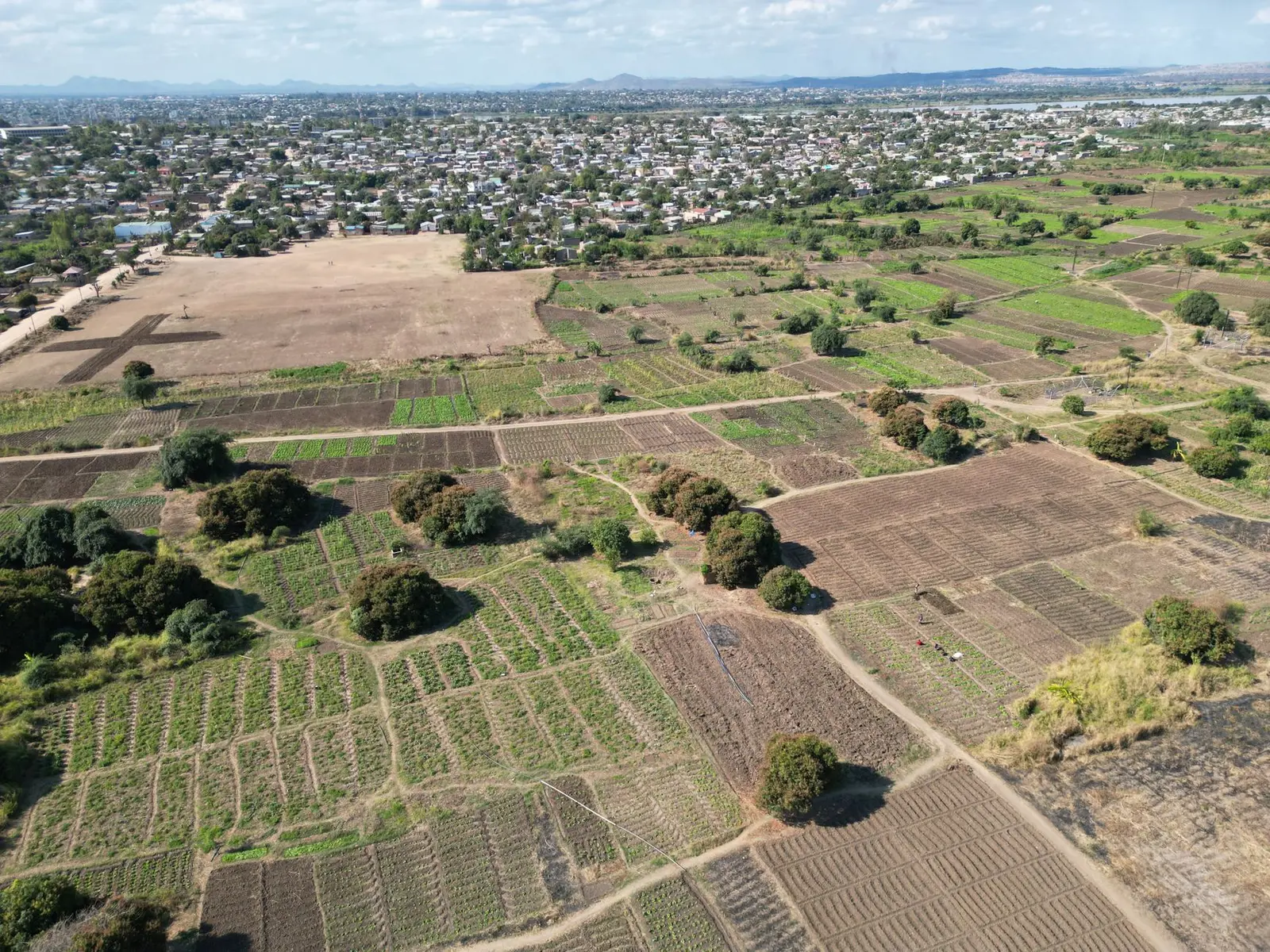
| Project Area Coverage | KSC New Town is not merely a suburb; it is a massive urban sprawl covering approximately 323.44 square kilometers |
| Villages Included | This jurisdiction encompasses 124 villages across the Uran, Panvel, and Pen talukas of Raigad district |
| Land Acquisition Model | Following the successful CIDCO model used in Navi Mumbai, the GR offers consenting landowners 22.5% of the developed land back in exchange for their raw plots |
| Master Plan Timeline | Master plan finalisation: August 2026 |
| Funding Sources | Around ₹11,177 crore is expected from land assets, while borrowings may cross ₹23,000 crore |
| Strategic Industries | According to the MMRDA's 2026-27 Budget, which allocated ₹4,000 crore specifically for Mumbai 3.0, the city will feature Edu-City: Space for five top-tier global universities to establish Indian campuses. Data Center Hub: Projected to host nearly 65% of India's data storage capacity |
The Budget Announcement
On February 16, 2026, MMRDA presented its Budget for the financial year 2026–27 with a total outlay of Rs 48,072.57 crore, marking its first surplus Budget since 2017–18. MMRDA had a deficit of Rs 7,468 crore in 2024–2025. In just three years, the authority has achieved a Rs 17 lakh surplus, thus signalling a decisive financial turnaround. The MMRDA has allocated Rs 4,600 crore for 'growth hub' projects, with the single largest provision of Rs 4,000 crore earmarked for the Karnala-Sai-Chirner (KSC) New Town.
CM Fadnavis' Vision and Policy Statement
Chief Minister Devendra Fadnavis, during his budget speech made on March 6, announced the government's move to develop Mumbai 3 to attract non-polluting industries like data centres, IT and ITeS, logistics, among others. According to the budget document, the 'Mumbai 3.0' programme is aimed at decongesting Mumbai by creating planned urban nodes with integrated economic, residential and employment ecosystems. CM Fadnavis estimated that it will initially attract investments worth Rs15 lakh crore.
Project Scope and Geography
KSC New Town is not merely a suburb; it is a massive urban sprawl covering approximately 323.44 square kilometers. The 'influence zone' spans three key tehsils in the Raigad District: Uran: The coastal gateway, home to the JNPT port and the landing point of the Atal Setu. Panvel: The commercial anchor and transit hub. The project encompasses 124 villages, including strategic nodes like Chirner, Sai, Dighode, and Vindhane. The construction of Atal Setu has significantly reduced the travel time between Mumbai and Navi Mumbai, and it now takes just a little over 20 minutes.
Land Acquisition and Compensation Policy
The most critical milestone for Mumbai 3.0 occurred on Tuesday, March 17, 2026, when the state government issued a comprehensive Government Resolution (GR) regarding land acquisition. According to the MMRDA's Land Acquisition and Allocation Policy, the government is moving away from purely compulsory acquisition in favour of a 'partnership' model. Following the successful CIDCO model used in Navi Mumbai, the GR offers consenting landowners 22.5% of the developed land back in exchange for their raw plots. But if the land due under this refund scheme is less than 40 sq mts, then direct cash compensation would be given. Eligible investors must acquire a minimum of 100 acres and commit to an investment of at least Rs 250 crore per 100 acres within four years.
Strategic Economic Vision: Data Centres, Education, and Services
According to the MMRDA's 2026-27 Budget, which allocated ₹4,000 crore specifically for Mumbai 3.0, the city will feature: Edu-City: Space for five top-tier global universities to establish Indian campuses. Medi-City: A high-tech healthcare cluster focusing on medical research and super-specialty hospitals. Data Center Hub: Projected to host nearly 65% of India's data storage capacity, leveraging the stable power and connectivity of the Raigad coast. Maharashtra's Chief Minister-Devendra Fadnavis and Union Education Minister Dharmendra Pradhan handed over the Letters of Intent (LoI) to five international universities- University of York, University of Western Australia and Istituto Europeo di Design.
Infrastructure Focus and 87% Allocation
The MMRDA infrastructure investment focuses mainly on transport and connectivity. Around 87 percent of the budget is dedicated to metro lines, tunnels, highways, and elevated corridors. Metro rail continues to dominate MMRDA's capital programme, with Rs 13,838.88 crore allocated for multiple corridors. Funding has been provided for lines 2B, 4, 5, 6, 9, 10, 12, 13 and 14, covering Mumbai, Thane, Mira-Bhayander, Kalyan-Dombivli, Bhiwandi and Badlapur. The MMRDA has earmarked Rs 3,630.71 crore for Metro Line 4 (Wadala–Kasarvadavali), Rs 2,407.78 crore for Metro Line 6 (Swami Samarth Nagar–Kanjurmarg), and Rs 1,309.30 crore for Metro Line 5 (Thane–Bhiwandi–Kalyan).
Private Sector Participation and Global Investment
Blackstone investing $11 billion in Maharashtra — $5 billion specifically for Mumbai 3.0. Highlighting Mumbai 3.0, Fadnavis announced the launch of India's first Innovation City, backed by a plug-and-play ecosystem for global investors. Tata Group has committed nearly $11 billion towards data centres and allied infrastructure. A Korean delegation met with MMRDA officials in April 2025 to discuss cooperation in smart infrastructure, technology, and investment, following a Memorandum of Understanding (MoU) signed between MMRDA and the World Smart Cities Forum (WSCF) in Davos.
Next Steps: Master Plan and Infrastructure Rollout
Master plan finalisation: August 2026. The Urban Development Department has appointed Singapore-based consultancy Surbana Jurong Infrastructure to prepare the comprehensive development blueprint. Online consent forms for landowners live April 27, 2026. The KSC New Town master plan finalizes August 2026 and main infrastructure builds in 2026-27. Realistic livability for the average end-user buyer: 2028-2030.
Challenges and Implementation Risks
Land acquisition and compensation continue to be the biggest hurdle. Industry representatives say transparency in plot allocation, infrastructure development and timelines will be crucial to gaining the confidence of landowners and investors. Environmental sustainability is another major challenge. The proposed area includes fertile agricultural land, forests and environmentally sensitive zones, requiring authorities to strike a balance between rapid urbanisation and ecological conservation. Infrastructure readiness also remains a critical factor. Experts believe that alongside roads, metro lines, railway connectivity, schools, hospitals, markets and other civic amenities must be developed simultaneously. Without timely infrastructure, residential and commercial demand may not grow at the anticipated pace.
Development phases
Land use
Frequently asked questions
What is KSC New Town and what does Mumbai 3.0 mean?
KSC New Town — Karnala-Sai-Chirner — is a 323.44 sq.km area within and overlapping NAINA, formally notified in October 2024 and assigned to MMRDA as the New Town Development Authority. 'Mumbai 3.0' or 'Third Mumbai' is the popular branding for KSC New Town.
How much money is being invested and from where?
The MMRDA has allocated Rs 4,600 crore for 'growth hub' projects, with the single largest provision of Rs 4,000 crore earmarked for the Karnala-Sai-Chirner (KSC) New Town. Around ₹11,177 crore is expected from land assets, while borrowings may cross ₹23,000 crore.
When will people be able to move in and use the city?
The KSC New Town master plan finalizes August 2026 and main infrastructure builds in 2026-27. Realistic livability for the average end-user buyer: 2028-2030.
What industries is Third Mumbai targeting?
Chief Minister Devendra Fadnavis announced the government's move to develop Mumbai 3 to attract non-polluting industries like data centres, IT and ITeS, logistics, among others. The city will feature Edu-City for five top-tier global universities, Medi-City for medical research and super-specialty hospitals, and a Data Center Hub projected to host nearly 65% of India's data storage capacity.
What happens to existing farmers and landowners?
The GR offers consenting landowners 22.5% of the developed land back in exchange for their raw plots. If the land due under this refund scheme is less than 40 sq mts, then direct cash compensation would be given.
Who is in charge of developing KSC New Town?
The Urban Development Department issued a GR designating Mumbai Metropolitan Region Development Authority (MMRDA) as the NTDA for a vast area covering approximately 323.44 sq. km. This jurisdiction encompasses 124 villages across the Uran, Panvel, and Pen talukas of Raigad district.
Sources
- MMRDA presents ₹48,072 crore surplus budget for 2026–27
- Rs 47,000 cr push for Mumbai infra as MMRDA tables first surplus budget in nearly a decade
- Maha govt proposes sops for land acquisition, allotment to push Mumbai 3.0 development
- Third Mumbai a step closer to reality: Maharashtra clears land policy for next business capital
- Mumbai 3.0 Complete Guide: KSC New Town Area-by-Area
- Third Mumbai Project: Inside Maharashtra's Blueprint for Mumbai 3.0 Beyond Atal Setu
- Third Mumbai Expansion Gains Momentum, But Land, Environment and Infrastructure Remain Key Challenges
- CM Fadnavis unveils Rs 12.26 lakh crore development roadmap for Mumbai Metropolitan Region