Region Overview
Amaravati: Andhra Pradesh's Planned Capital City — Overview, Status & Master Plan
Amaravati is the greenfield capital city that Andhra Pradesh is building on the banks of the Krishna River in Guntur district, on land voluntarily pooled from local farmers starting in 2015. In 2026, after a decade of political back-and-forth, Parliament made it the state's sole and permanent capital by law.
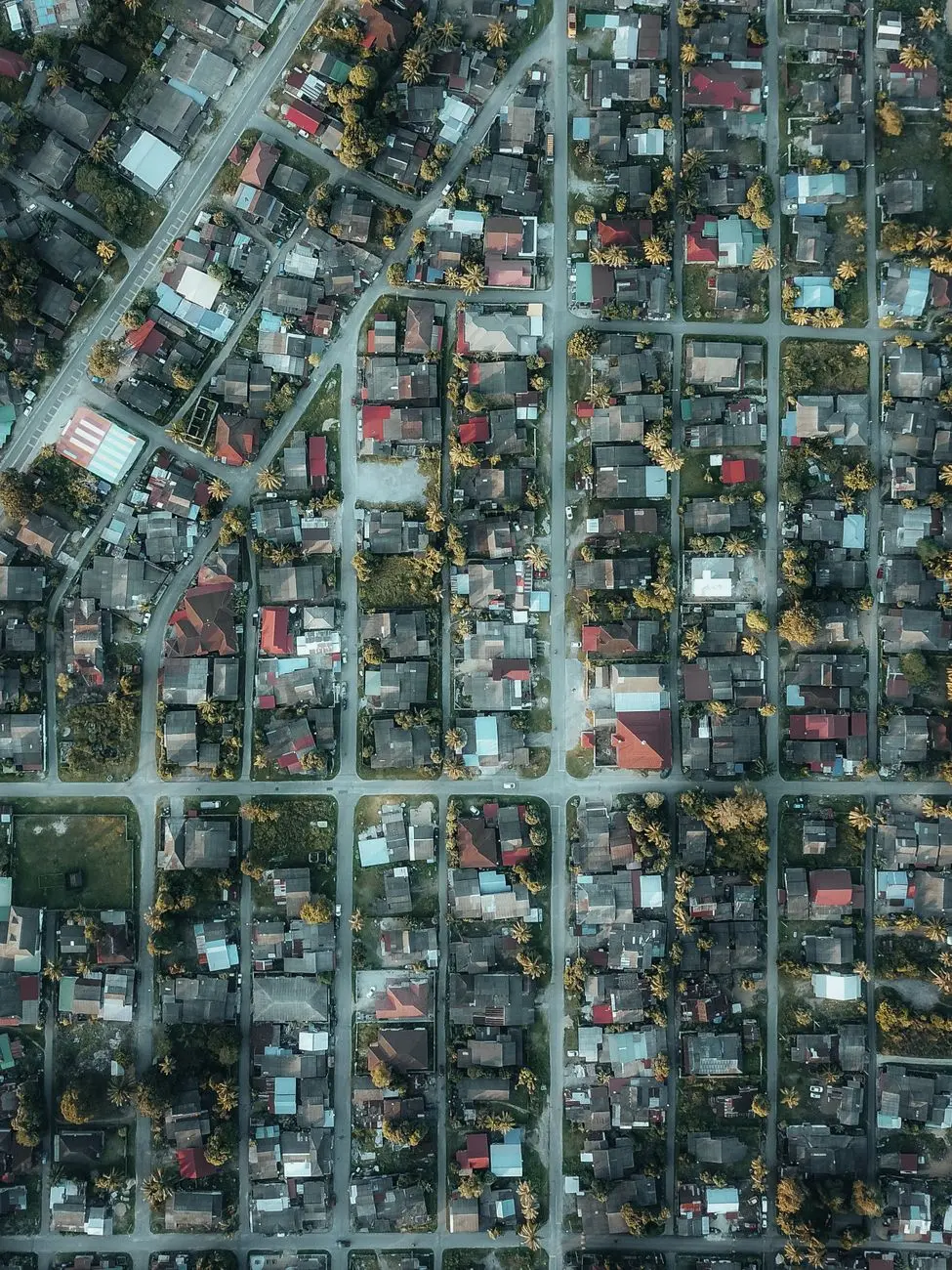
| Capital City notified area | 217.23 km² (53,748 acres) |
|---|---|
| Villages/mandals covered | 25 villages (29 habitations) in Thullur, Mangalagiri & Tadepalli mandals, Guntur district |
| Development authority | APCRDA (Andhra Pradesh Capital Region Development Authority), plus Amaravati Development Corporation Ltd (ADCL) |
| Wider APCRDA jurisdiction | 8,352.69 km² across Guntur, Krishna, NTR, Palnadu, Bapatla & Eluru districts |
| Land pooled so far (Phase 1) | ~34,000 acres from local farmers |
| Phase-1 external financing | $1.6 billion (World Bank + ADB, $800m each) plus ₹15,000 crore pledged by Government of India |
| Legal capital status | Notified as capital location on 23 April 2016; made sole/permanent capital by Parliament in 2026 |
| Master plan target population | 3.5 million people by 2050, ~1.5 million jobs |
What Amaravati Is
Amaravati is the purpose-built capital city of Andhra Pradesh, located in Guntur district on the right bank of the Krishna River, a short distance from Vijayawada. It is located in Guntur district on the right bank of the Krishna River, 15 kilometres southwest of Vijayawada. The city takes its name from a nearby ancient site: the city derives its name from the nearby historic site of Amaravathi, which served as the capital of the Satavahana Empire nearly two thousand years ago.
Unlike most Indian cities, Amaravati did not grow organically — it is a planned greenfield capital laid out on land that was almost entirely agricultural until 2015. The Capital City area at the time of land pooling predominantly consisted of agricultural fields mainly with commercial crops irrigated through lift irrigation schemes from the River Krishna.
Who Is Building It
Urban planning and construction in Amaravati is carried out by two bodies: the Amaravati Development Corporation Limited and Andhra Pradesh Capital Region Development Authority (APCRDA). The APCRDA has jurisdiction over the city and the conurbation covering Andhra Pradesh Capital Region. APCRDA itself has had a turbulent institutional history — the APCRDA was established under the Andhra Pradesh Capital Region Development Authority Act, 2014 (dissolved in 2020 and reestablished in 2021) after a previous state government tried to split administrative functions across three cities.
The original masterplan concept came from abroad: the Singapore government drew up the overall Amaravati masterplan free of charge, and it was notified on February 23, 2016, while the UK-based Foster & Partners, with architect Hafeez Contractor, prepared a masterplan for the new government complex including the Assembly and high court. Financing is multi-source: the Amaravati Capital City project is being jointly financed by the World Bank and Asian Development Bank, which have each committed $800 million, bringing total external funding to $1.6 billion for Phase-I, and the Government of India has pledged ₹15,000 crore, of which ₹1,400 crore has already been allocated.
Official Notified Area, Villages & Districts
The core Capital City footprint is precisely defined in government orders. The Government has notified an extent of 8,352.69 sq km as the Andhra Pradesh Capital Region, and separately notified 217.23 sq km as the Andhra Pradesh Capital City Area, which has an area of 217.23 km² and is spread across 25 villages in three mandals — Thullur, Mangalagiri and Tadepalli — of Guntur district. Some official documents count this slightly differently: there are 29 habitations, including 24 villages, one part urban municipality and 4 hamlets within the perimeter of Amaravati city.
The surrounding capital region is far larger. The Capital Region includes 953 villages and 12 urban local bodies spread across 26 mandals in Guntur district and 30 mandals in Krishna district. Later reorganisation of districts means APCRDA's jurisdiction is now usually described as spanning the districts of Guntur, Eluru, NTR, Krishna, Palnadu, and Bapatla.
Land assembly for the core city relied on a voluntary land-pooling scheme rather than compulsory acquisition. The government aimed to acquire approximately 53,748 acres of land from 27 villages, of which around 33,733 acres were pooled through the scheme. The Amaravati Capital City project, launched in 2014, pooled 34,389 acres through the voluntary Land Pooling Scheme, offering farmers 22–30 percent of developed land and other benefits.
Why Amaravati Exists
Amaravati exists because of the 2014 split of the old Andhra Pradesh. The bifurcation of Andhra Pradesh in 2014 resulted in the residual state having no capital city, with Hyderabad serving as the state's temporary capital despite being located in the new state of Telangana. The government under N. Chandrababu Naidu founded Amaravati and declared it the new state's capital city, with Prime Minister Narendra Modi laying the foundation stone at Uddandarayunipalem village on 22 October 2015.
For years the project's status was unsettled. A rival government tried a three-capital model, and as of 1 August 2020 the government proposed three capitals — Visakhapatnam as executive, Amaravati as legislative, and Kurnool as judicial capital — but the process was cancelled and reverted to the original 2014 single-capital plan on 22 November 2021. That uncertainty was finally resolved in 2026: the Lok Sabha passed the Andhra Pradesh Reorganisation (Amendment) Bill, 2026, officially designating Amaravati as the sole and permanent capital of Andhra Pradesh, insulating the city's status from future political fluctuations, and Parliament passed the Andhra Pradesh Reorganisation (Amendment) Bill, 2026, with the Rajya Sabha approving it, according statutory status to Amaravati as the sole capital.
Status Right Now (as of July 2026)
Construction, which had largely stalled between 2019 and 2024, resumed after the 2024 state election. Between 2017 and 2019, major infrastructure projects were initiated, but development halted due to a change in government policy to make three capitals; following the 2024 state elections, the new government decided to revive development of the capital at Amaravati.
Government-building work is now visibly underway. Minister for Municipal Administration and Urban Development P. Narayana launched raft foundation works for the Andhra Pradesh High Court building, based on a design by Foster and Partners, a structure that will be built over a total area of 21 lakh square feet and accommodate 52 court halls, with a government target to complete the High Court building by the end of 2027. Separately, a January 2026 authority meeting noted that the construction of 4,026 government quarters, five administrative towers, the Assembly, and the High Court is being expedited to meet deadlines.
Funding is flowing under a milestone-based model. The World Bank has released $340 million for the development of Amaravati under Phase-I of the project, marking a step toward accelerating infrastructure, with another $130–150 million expected soon. The project is implemented under the Amaravati Integrated Urban Development Programme using a Program-for-Results model, so funding is linked to measurable progress rather than fixed timelines.
The city's footprint is also being expanded well beyond the original 25-village core. On 7 January 2026 the state government launched the second phase of land pooling in Amaravati, targeting 16,666.57 acres across seven villages in Thullur and Amaravati mandals for projects such as a railway track, the Inner Ring Road, and an International Sports City. The Chief Minister had said the current 29-village footprint is inadequate to build a metropolitan entity comparable to Hyderabad, warning that if Amaravati remains confined to the existing area it risks becoming only a municipality rather than a capital-scale urban economy. Taken together with earlier acquisitions, the state has already acquired 34,000 acres under land pooling, plus an additional 16,000 acres from endowment, forest, Waqf and Poramboke lands, taking Amaravati's footprint to 50,000 acres — though a further proposal to acquire 30,000 acres across 11 villages outside the core capital grid is facing resistance.
Headline Connectivity
Amaravati sits close to the Kolkata–Chennai NH-16 corridor. NH-16 between Kolkata and Chennai runs on the eastern side of the capital city, while NH-16 between Pune and Machilipatnam is on the northern side, and existing major district roads provide access through NH16. Inside the city, the Amaravati Seed Capital Road is an arterial road under construction to access the core capital area from NH16, and 16 roads running east–west and 18 roads running north–south are planned in the Amaravati core capital area, spanning 217 sq km.
Rail and air links are still largely at the planning/construction stage. There is currently no operating airport or major railway station inside the notified capital city; the nearest airport is Vijayawada (Gannavaram) Airport, about 50 km away, and the nearest railway station is Vijayawada Junction, around 64 km away. Two big projects aim to change that. A dedicated greenfield international airport is planned: the Amaravati greenfield international airport project will be developed over 4,618 acres near Ravela, with an estimated first-phase investment of ₹3,409 crore, and land for it is among the parcels covered in the 2026 land-pooling drive. On rail, reports describe a large new station project: the station is planned across 1,500 acres with 24 platforms and four terminals, capable of handling 3,00,000 passengers daily, with the Central government investing Rs 2,245 crore in a project that includes a 57 km broad-gauge line, a 3.2 km bridge over the Krishna River, and direct rail links to Chennai, Kolkata, Hyderabad, and Bengaluru — this remains an announced project, not yet operational.
What Happens Next
The near-term construction pipeline is dominated by government buildings and core infrastructure. Alongside the High Court (targeted for late 2027), seven major buildings in the capital city are planned to be developed as iconic structures designed to meet global architectural standards. The masterplan also envisages themed districts beyond the government core: nine theme cities within it — Government City, Justice City, Finance City, Knowledge City, Electronic City, Health City, Sports City, Media City and Tourism City. On the technology front, future developments include the Quantum Valley Tech Park, set for 2026, which will host IBM, TCS, and IIT Madras to develop India's largest quantum computer.
Land assembly will keep expanding the city's footprint through 2026 as the second land-pooling phase (16,666.57 acres) proceeds village by village, feeding the airport, Inner Ring Road, sports city and rail projects. Longer term, the masterplan's ambition remains large: the government has prepared the masterplan for a 217 sq km city to accommodate 3.5 million people by 2050, up from roughly 100,000 people currently living in the Amaravati area.
Development phases
Land use
Latest from Amaravati
Frequently asked questions
Is Amaravati officially the capital of Andhra Pradesh?
Yes, as of 2026. It was first notified as the capital location on 23 April 2016, and in 2026 Parliament passed the Andhra Pradesh Reorganisation (Amendment) Bill giving it statutory status as the state's sole and permanent capital, retrospective to 2 June 2024.
Who is developing Amaravati?
The Andhra Pradesh Capital Region Development Authority (APCRDA) and the Amaravati Development Corporation Limited (ADCL) are the lead government agencies, with the original masterplan drawn up by Singapore government planners and government-complex architecture by Foster & Partners.
How big is the notified capital city area, and which villages does it cover?
The Capital City area is notified at 217.23 km² (53,748 acres), spread across 25 villages (also described as 29 habitations) in the Thullur, Mangalagiri and Tadepalli mandals of Guntur district.
Why was Amaravati built in the first place?
When Andhra Pradesh was split in 2014 to create Telangana, the residual state lost its capital, Hyderabad. Amaravati was chosen and founded as an entirely new capital city on land pooled from local farmers.
What is under construction in Amaravati right now?
As of mid-2026, government buildings including the High Court and Assembly, administrative towers, government staff quarters, sub-arterial roads and utility corridors are under active construction, funded partly through World Bank and ADB financing.
Does Amaravati have its own airport or railway station yet?
Not yet. The nearest operating airport is Vijayawada (Gannavaram), about 50 km away, and the nearest major railway station is Vijayawada Junction. A dedicated greenfield international airport near Ravela and a large new railway station/line are both planned but not yet operational.
What's next for Amaravati?
A second phase of land pooling (16,666.57 acres across seven villages) launched in January 2026 to make room for an airport, Inner Ring Road, rail line and International Sports City, alongside continued construction of government buildings targeted for completion around 2027.
Sources
- Amaravati as Permanent Capital of AP — Drishti IAS
- Amaravati — Wikipedia
- Amaravati to now be permanent capital of Andhra Pradesh — Akashvani News
- Andhra Pradesh Capital Region Development Authority — Wikipedia
- Amaravati Officially Named Permanent Capital of Andhra Pradesh — The Researchers
- Amaravati Sustainable Capital City Development Project (ASCCDP) — World Bank ESMF
- Amaravati Sustainable Capital City Development Project — World Bank Resettlement Policy Framework
- Andhra Pradesh Capital Region — Wikipedia
- Amaravati: Andhra's 'Eternal City' that's taking forever to build — The Federal
- Work commences on High Court complex in Amaravati — News On Projects
- World Bank Support for Amaravati as a Growth Hub in Andhra Pradesh
- International Bank for Reconstruction and Development — ESSA Amaravati City Capital Development Program
- World Bank Amaravati Funding 2026: $340 Million Boost — Edunovations
- Transport and Mobility Presentation — APCRDA
- Plan to connect Amaravati roads with NH16 — Deccan Chronicle
- India's Biggest Railway Station Near Amaravati — M9 News
- How to reach SRM University-AP, Amaravati
- How to Reach Amaravati — Indian Holiday
- Andhra Pradesh Plans 9 New Airports with $1 Billion Investment — Maritime Gateway
- Greenfield International Airport planned for Amaravati — Deccan Chronicle
- Andhra Pradesh: Second phase of land pooling begins in Amaravati — Business News This Week
- Phase II of land pooling for Amaravati infrastructure projects begins — Telangana Today
- Amaravati Land Pooling Returns — Sakshi Post