Land Acquisition
Amaravati Land Acquisition: Pooling Model, Compensation Rates and Current Status
Amaravati's capital city land has been assembled mainly through a voluntary Land Pooling Scheme (LPS) rather than conventional land acquisition, with a second phase now underway alongside unresolved compensation issues from the first round.
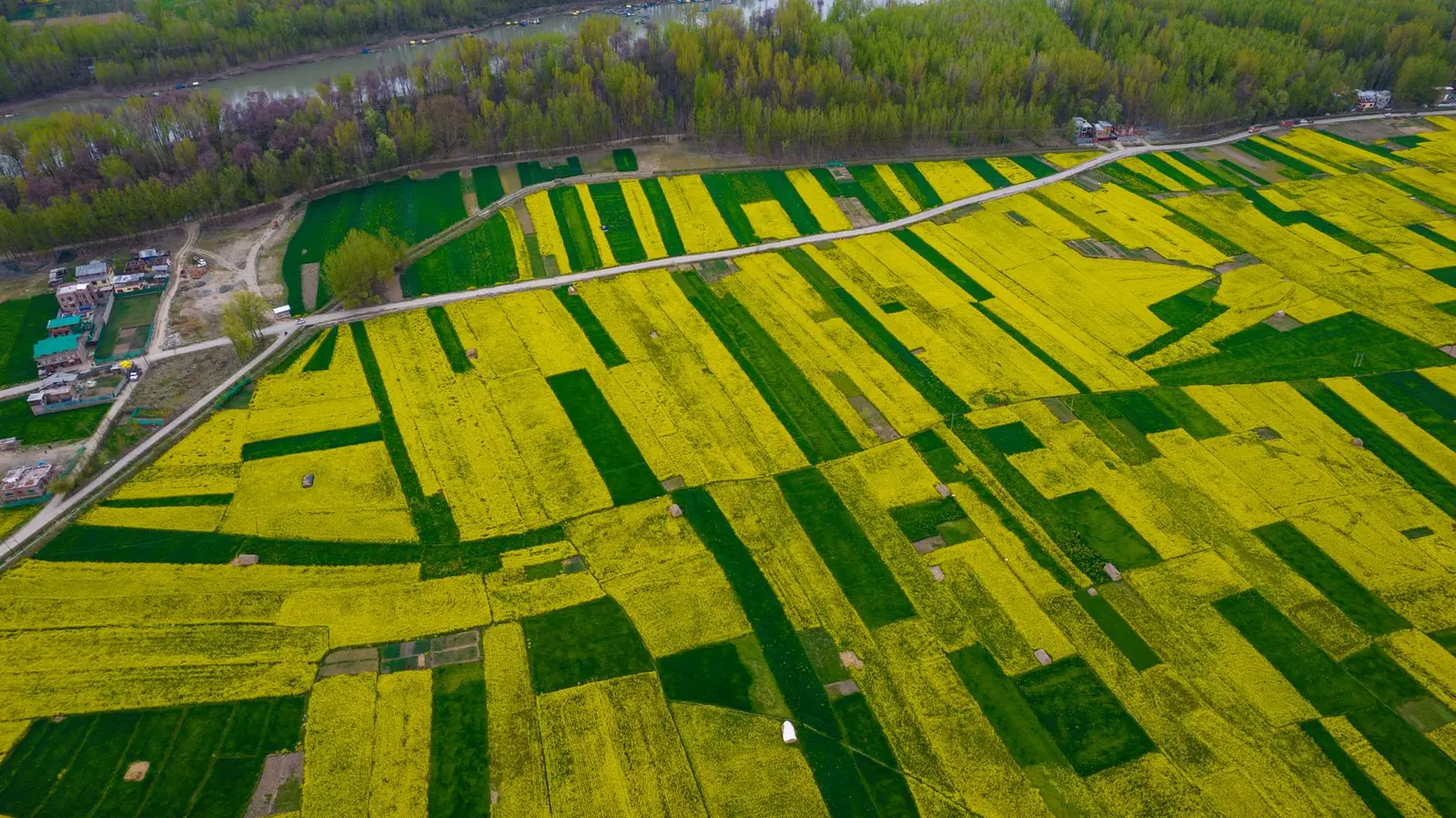
| Acquisition model | Voluntary Land Pooling Scheme (LPS) under APCRDA Act 2014, with compulsory acquisition powers (Section 55(2)) used for holdout parcels |
|---|---|
| Phase 1 land pooled | Approx. 33,733–34,000 acres from farmers, plus ~16,000 acres of government/endowment/forest/Waqf land |
| Phase 1 villages | Around 25–29 villages across Thullur, Mangalagiri and Tadepalli mandals, Guntur district |
| Phase 2 land notified | 16,666.57–16,666.78 acres from 7 villages, notified January 2026 |
| Phase 1 annuity rate (2022) | ₹50,000/acre for Jareebu (fertile) land; ₹30,000/acre for Metta (dry) land, with 10% annual increase |
| Returnable plot ratio | 800–1,200 sq yd residential + up to 450 sq yd commercial per acre pooled (patta owners); lower for assigned-land owners |
| CAG-flagged spend | ₹2,244.94 crore spent on land lying idle, per September 2023 CAG report |
| Plot registrations (Dec 2025) | 61,793 plots registered; 7,628 registrations pending |
| Current stage (as of July 2026) | Phase 2 pooling notified and launched Jan 2026; Phase 1 grievances (annuities, pensions, pending plots) being addressed under a Centre-state review committee |
How the land was acquired: the pooling model
Amaravati's land was not acquired through the standard Right to Fair Compensation and Transparency in Land Acquisition Act (RFCTLARR), 2013 cash-compensation route for most parcels. The Andhra Pradesh Capital Region Development Authority (APCRDA) Act, 2014 created a voluntary Land Pooling Scheme (LPS), under which farmers surrendered land in exchange for developed plots and other benefits rather than being paid full market-rate cash compensation.
The Act allowed for voluntary land pooling, enabling landowners to surrender their land in exchange for developed plots and financial compensation. The government presented three options to landholders: instead of land acquisition, the Andhra Pradesh government gave three options to the people to take their land, first to give up their land under the Land Pooling rules notified under the Andhra Pradesh Capital Region Development Authority Act, 2014, where instead of compensation, they will get reduced land ownership (of the developed land) in exchange once the city is developed.
Where voluntary consent has not been forthcoming — mainly in Phase 2 — the government has increasingly relied on formal acquisition notices alongside pooling. The Andhra Pradesh Capital Region Development Authority (APCRDA) held a Gram Sabha in Nowlur village as part of the ongoing land acquisition process, with senior officials explaining acquisition procedures and informing landowners that those included in the acquisition notification still have an opportunity to voluntarily join the Land Pooling Scheme within the prescribed period. This shows the model has shifted from purely voluntary pooling toward a dual approach combining consent-based pooling with formal acquisition for laggard parcels, a pattern also confirmed for Phase 2: the Capital Region Development Authority (CRDA) has undertaken outreach measures to rebuild confidence among farmers, while also initiating land acquisition in cases where voluntary pooling has not progressed.
Villages covered: Phase 1 and Phase 2
Phase 1 (2014–2015): The project is spread across 25 villages in three mandals (Thulluru, Manglageiri and Tadepalli) of Guntur district and a land area of about 54,000 acres was targeted, comprising primarily agricultural land. Of this, around 33,733 acres were pooled through this scheme. A slightly different count puts the pooled figure and village spread at: more than 33,000 acres of fertile land were pooled from nearly 29 villages across Guntur and Krishna districts. Key villages that saw early, high-profile pooling activity include Thulluru, Rayapudi, Lingayapalem, Velagapudi, Nidamarru, Mandadam and Undavalli — farmers from Thulluru, Rayapudi, Lingayapalem and Velagapudi villages visited the capital region development authority office and submitted consent letters expressing their willingness to pool their lands for the capital project. Undavalli in particular has a long history of friction: the project was delayed due to land acquisition/pooling issues in Undavalli village between 2014 and 2019, but negotiations have recently resumed under the Capital Region Development Authority.
Phase 2 (2025–2026): The second phase of land pooling in the Amaravati Capital Region began on January 3, 2026, with land pooled from seven villages and nine units, and the state government set to acquire a total of 16,666.78 acres. The villages named are: Vykuntapuram, Pedamadduru, Endroy, Karlapudi Lemalle, Vaddamanu, Harichandrapuram, and Pedapiri [village list continues per source]. District-wise, the split is: authorities issued a notification for pooling 9,097 acres of patta land and 7 acres of assigned land in Thulluru mandal of Guntur district and 7,465 acres of patta land and 97 acres of assigned land in Amaravati mandal in Palnadu district. Officials have also flagged particular farmer response in one Phase 2 village: officials indicated that policy certainty has contributed to improved response from farmers, particularly in villages such as Pedaparimi, where landowners have come forward to offer significant parcels for pooling.
Beyond Phase 2, the government has floated a further expansion: the proposal to acquire another 30,000 acres across 11 villages located outside the core capital grid is facing resistance from various quarters, as the government plans to build an international airport in Amaravati by acquiring an additional 30,000 acres.
Compensation rates and benefits
Compensation under the LPS is a mix of an annual cash annuity, a developed-plot return, and social benefits — not a one-time market-value cash payout.
- Annuity (cash, per acre, per year): As stated by a state minister in 2022, Amaravati farmers would be paid Rs 50,000 per acre for Jareebu (fertile) lands and Rs 30,000 per acre for Metta (dry) lands with an annual increase of 10 per cent.
- Original government promise (rent-style payment): the government also made other promises to the farmers, including rent of up to Rs 50,000 per acre for 10 years, jobs for family members of those who gave their land for the project, reimbursement of children's education fees, residential and commercial plots, all major infrastructure facilities like roads, power lines and drainage and free health cards.
- Returnable developed plots: Patta owners (land title holders) were promised a developed plot of 1,050 square yards per acre of pooled land, but the assigned land owners (those who are allotted temporary land titles under the Andhra Pradesh Assigned Land Act, 1977) were only promised 600 square yards of the developed plot. A separate account of the plot formula states: farmers were promised smaller but fully developed plots, typically 800 to 1,200 square yards of residential land and up to 450 square yards of commercial land per acre surrendered, along with annual annuities, pensions, skill training and village-level infrastructure.
- Non-land benefits under the 2025 rules (for expanded pooling): the new rules allow landowners to voluntarily surrender land in return for developed plots, annuity payments, and social benefits like free education, healthcare, pensions, housing support, and a farm loan waiver of up to Rs 1.5 lakh, with safeguards such as Aadhaar-based consent, ownership verification, and Land Pooling Ownership Certificates (LPOCs).
- Exemptions: exemptions apply to religious lands, weaker-section colonies, and village habitations, while the government promises to finish infrastructure within three years of issuing LPOCs.
No official Phase 2-specific per-acre annuity rate or fresh RERA/GO number was found in current reporting; the 2022 rate above remains the most recent figure on record.
Budget and funding
Phase 1 capital-city development (which the pooled land underpins) was to be funded through a mix of multilateral loans and central government support: the World Bank and Asian Development Bank (ADB) together committed to fund USD 1600 Million (Rs 13,600 crore), USD 800 Million each, for Amaravati capital city phase-I development, while the Centre promised to contribute remaining Rs 1,400 crore, out of the Rs 15,000 crore committed by the Central Government for phase-I of the development.
On the spending side, a national audit found substantial sums had gone into land that remained unused: in a report released in September 2023, the Comptroller and Auditor General of India (CAG) rapped the successive State governments asserting that the land acquired through the Land Pooling Scheme (LPS) had been lying idle after spending Rs 2,244.94 crore, and that the objective of the LPS had not been fully met. No updated, itemised Phase 2 budget figure was found in current reporting; Phase 2 costs would fall under the broader capital-development funding envelope described above.
Disputes and farmer negotiations
Compensation and delivery gaps have been a recurring source of friction since Phase 1 began.
Early compensation objections: while many farmers participated, some, particularly from Penumaka and Undavalli, expressed concerns about compensation rates. Farmers also demanded equal compensation after alleged claims of discrimination in compensation between patta and assigned-land holders.
Post-2019 disruption: After the change of state government, the project lost momentum after the 2019 change in government, when the YSRCP proposed a three-capital model that effectively froze Amaravati's core development, and infrastructure works slowed to a crawl, plot development remained incomplete, annuity payments were disrupted and pensions were stopped for thousands. This produced sustained unrest: what followed were prolonged agitations by farmers, court battles in the High Court and growing financial distress in villages that had already ceded their primary source of livelihood, and by 2024, many of the pooled lands lay fallow, while basic amenities such as roads, drainage, drinking water and sanitation remained conspicuously absent.
Legal disputes: Farmers have also gone to court over allotment policy. Farmers of Amravati decided to knock on the doors of the Supreme Court against the High Court's refusal to stay an order declaring a new zone R-5 for houses for the poor on about 900 acres, and in May 2023 the Andhra Pradesh High Court refused to pass interim orders on a petition challenging the state government's move to allot house sites in the capital region to non-locals, though it said allotment would be subject to the final judgment.
Recent redress efforts (late 2025): A Centre-state review found major backlogs: officials informed the committee that while 61,793 plots have been registered, 7,628 registrations remain pending, and around 700 farmers have been allotted 921 plots, though acquisition-related issues persist. Large-extent land contributors seeking allotments of up to seven acres were told that such cases would take additional time, a point that continues to cause unease among some farmers. On pensions, relief has been announced: in a major relief measure, the committee also cleared the restoration of pensions for 4,929 eligible beneficiaries, with a monthly payout of ₹5,000, and pending pension arrears that were halted during land acquisition will be cleared, with fresh applications accepted at local offices.
Phase 2 resistance: Not all new pooling has gone smoothly — the associated proposal for a much larger land pool has drawn pushback: the proposal to acquire another 30,000 acres across 11 villages located outside the core capital grid is facing resistance from various quarters. A commentary on Phase 2 also noted political risk: amid resistance from farmers and concerns over unmet commitments from the first pooling phase, the state recently put the second phase of pooling of around 4[0,000+ acres under scrutiny before proceeding].
Current stage (as of July 2026)
Phase 2 pooling has moved from notification to active implementation. The second phase of land pooling in the Amaravati Capital Region began on January 3, 2026, with land pooled from seven villages and nine units, and the state government set to acquire a total of 16,666.78 acres. A completion target was set: GIS mapping and field-level surveys will be conducted before entering into agreements, with the target set to complete the process by February 28, 2026.
By April 2026, momentum had reportedly improved following political reaffirmation of Amaravati's capital status: the second phase of Amaravati's land pooling scheme gathered pace following amendments to the Andhra Pradesh State Reorganisation Act (APSRA), which reaffirmed Amaravati as the state's capital, with the government seeking to pool an additional 16,666 acres across multiple villages to support infrastructure projects, including a greenfield airport and industrial developments. Notifications for specific parcels have also been used where voluntary pooling stalled: notifications have been issued for specific land parcels in locations such as Thulluru, Nidamarru, Lingayapalem, Mandadam, and Undavalli, particularly where delays in land availability have affected ongoing infrastructure works, with authorities adopting a dual approach combining voluntary land pooling with targeted acquisition to ensure continuity in project timelines.
Overall land footprint: the state government has already acquired 34,000 acres under land pooling for capital development works, with an additional 16,000 acres coming from endowment, forest, Waqf and Poramboke lands, taking Amaravati's footprint to 50,000 acres. With Phase 2's 16,666-odd acres, the combined pooled/acquired total is on track toward the government's stated long-term target: the capital is planned across 70,000 acres, combining government land and land pooled from farmers. Separately, Chief Minister N. Chandrababu Naidu has set a completion horizon for core capital works: Chandrababu Naidu announced that Phase 1 of the capital will finish by 2028.
Development phases
Frequently asked questions
Is Amaravati's land acquired through cash compensation or land pooling?
Mainly through a voluntary Land Pooling Scheme (LPS) where farmers get developed plots, an annuity and other benefits instead of a one-time cash payment. Compulsory acquisition provisions have been used for parcels where consent has not been given, especially in Phase 2.
How much land has been pooled so far?
Roughly 34,000 acres were pooled from farmers in Phase 1, plus about 16,000 acres of government/endowment/forest/Waqf land, taking the total to about 50,000 acres before Phase 2.
What is the current annuity rate for pooled land?
The most recent publicly reported rate (2022) was ₹50,000 per acre per year for fertile (Jareebu) land and ₹30,000 per acre per year for dry (Metta) land, with a 10% annual increase. No newer official rate has been reported.
Which villages are involved in Phase 2 land pooling?
Seven villages/nine units, including Vykuntapuram, Pedamadduru, Endroy, Karlapudi Lemalle, Vaddamanu, Harichandrapuram and Pedapiri, spanning Thulluru mandal in Guntur district and Amaravati mandal in Palnadu district.
What disputes have farmers raised?
Complaints include unequal compensation between patta and assigned-land owners, annuity and pension payments being stopped between 2019 and 2024, incomplete plot development, and, more recently, resistance to a proposed further 30,000-acre acquisition for an airport.
What is the status of plot registrations?
As of a December 2025 review, 61,793 plots had been registered under the Phase 1 scheme, with 7,628 registrations still pending.
When is Amaravati's core capital expected to be complete?
Chief Minister N. Chandrababu Naidu has stated that Phase 1 of the capital construction is targeted for completion by 2028.
Sources
- Amaravati - Wikipedia
- Amaravati Sustainable Capital City Development Project (ASCCDP) - ESMF
- Farmers Voluntarily Pool 100 Acres for Amaravati Capital in a Day - Deccan Chronicle
- APCRDA engages with farmers in Nowlur Gram Sabha amid Amaravati land pooling efforts
- AP government paid Rs 185 crore annuity to Amaravati farmers - Deccan Chronicle
- Land pooling, farmer resistance, and the Amravati capital project in Andhra Pradesh - Land Conflict Watch
- Amaravati land pooling: Government sets tight timelines to resolve decade-long farmer grievances - The South First
- Amaravati Land Pooling Phase 2 to Begin on January 3 - M9 News
- Phase II of land pooling for Amaravati infrastructure projects begins - Telangana Today
- Amaravati Second Phase Land Pooling: Time for CBN Govt To Wake Up - M9 News
- Amaravati's land pooling scheme 2.0 gains traction following APSRA amendments and renewed farmer participation
- APCRDA Land Pooling Details - crda.ap.gov.in