Land Acquisition Tracker
Land Acquisition for Bihar's 11 Greenfield Satellite Townships (Pataliputra, Mithila, Magadh, Vikramshila, Tirhut, Koshi, Saran, Anga, Sitapuram, Hariharnathpuram, Purnia)
Bihar's cabinet has approved 11 greenfield satellite townships, led by the 81,730-acre Pataliputra Township near Patna, and is pursuing a land-pooling model rather than outright acquisition — but a partial land-transaction ban, unresolved compensation terms and farmer protests in Masaurhi show the process is still contested and incomplete.
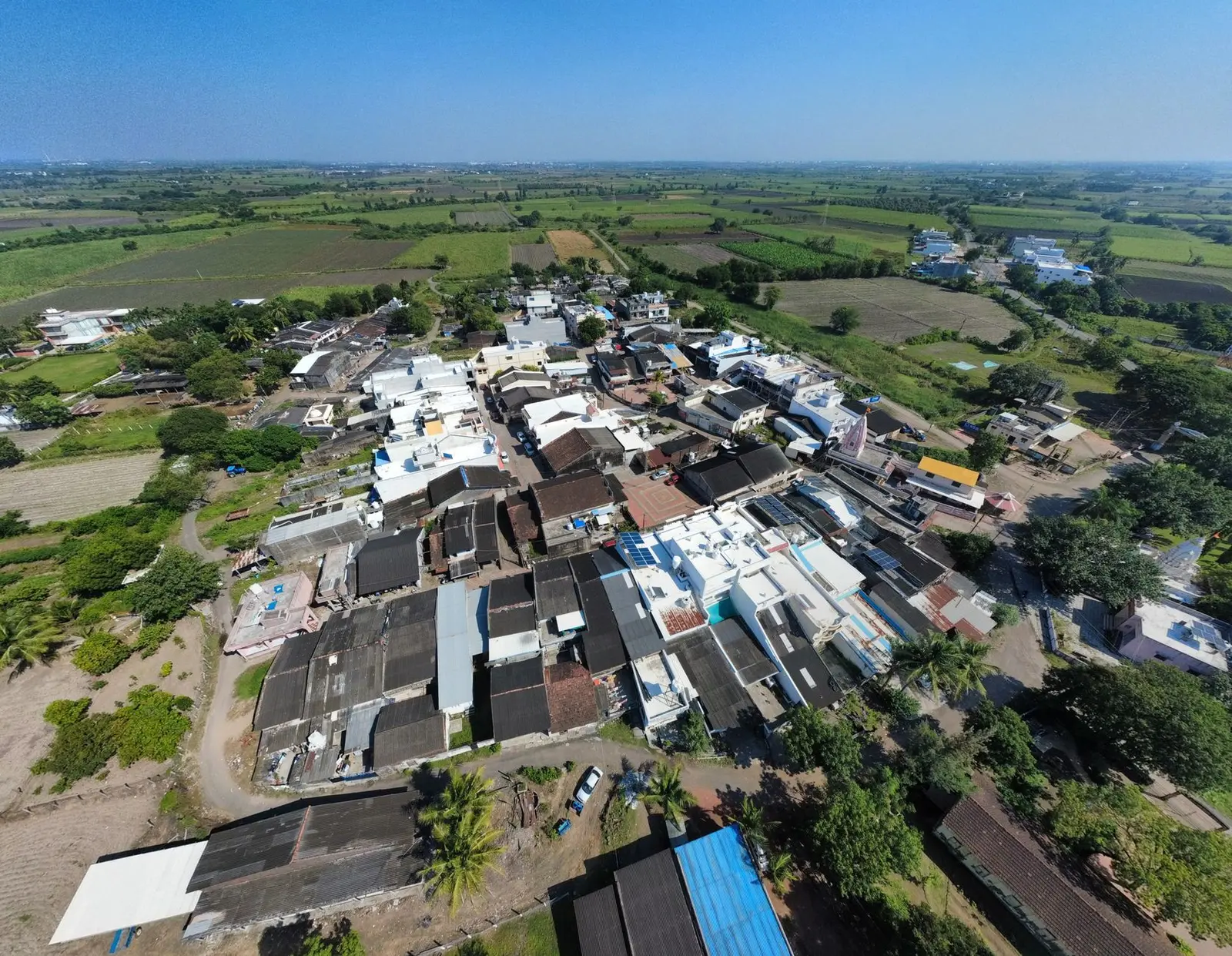
| Cabinet approval | 22 April 2026, first cabinet meeting of the Samrat Choudhary government |
|---|---|
| Number of townships | 11, including Pataliputra (Patna) |
| Pataliputra special zone / core zone | ~81,730 acres special zone + 1,010 acres core area |
| Pataliputra villages covered | ~274–275 revenue villages across Punpun, Fatuha, Sampatchak, Dhanarua, Masaurhi, Phulwari, Patna Rural, Naubatpur, Daniyawan blocks |
| Mithila Township (Darbhanga) | 102 villages; 17,400-acre special area + 1,600-acre core area |
| Magadh Township (Gaya) | 1,629-acre core area + 22,200-acre special area across Bodh Gaya, Gaya Town, Paraiya blocks |
| Land-pooling return ratio | 55% of developed land returned to original landowners; state retains ~45% for infrastructure/EWS housing |
| Compensation (BSHB direct-purchase route) | 2x market value/circle rate for urban land; 4x for rural land, under Bihar Raiyat Land Purchase Policy-2026 |
| Land-transaction ban | Imposed 22 April 2026; partially relaxed 17 June 2026; general private sales frozen till March 2027 (7 townships) / June 2027 (4 townships) |
| Farmer protest | Mass dharna by thousands of farmers at Masaurhi subdivision office against Pataliputra land acquisition |
Acquisition Model: Land Pooling, Not Compulsory Acquisition
The state government's stated approach is a land-pooling Town Planning Scheme (TPS) under the Bihar Urban Planning and Development (BUPD) Act, 2012, rather than compulsory land acquisition. Urban Development and Housing Department principal secretary Vinay Kumar said the government wants to develop the townships through land-pooling under the TPS, describing it as a statutory land-pooling tool used to transform irregular, undeveloped land into planned urban layouts without compulsory land acquisition, and said 55 per cent of the developed land would be returned to farmers.
The department has stated that no landowner whose land falls under the satellite township areas will be deprived of their land, and that the government will return 55 per cent of the land to landowners/farmers after developing it. Officials say the process is transparent and legally framed: the department will publish the draft town plan and map in newspapers for suggestions and objections, and will proceed only once landholders agree. A tribunal will hear grievances, and aggrieved parties can file appeals. For those unwilling to join the pooling scheme, officials said there would be a "negotiated purchase" with the concerned landowner.
Land will be acquired only after a comprehensive verification process under the Bihar Urban Planning Scheme Rules, involving scrutiny of ownership records and the total number of landholders within notified areas, with authorities also determining the proportion of land to be acquired under the scheme. This is being carried out in coordination with the Departments of Revenue and Land Reforms and Excise and Registration.
Separately, a parallel channel has opened for landowners who want to sell rather than pool land. On 17 June 2026 the Bihar cabinet approved a proposal to partially relax the land transaction ban across all 11 township zones, and under the new Bihar Raiyat Land Purchase Policy-2026, landowners can sell land through two regulated channels: direct sale to the Bihar State Housing Board (BSHB), or sale/lease for SIPB-approved investment projects. General private land-to-land transactions between individuals remain restricted until the master plan is officially approved, targeted for March 2027 in Pataliputra's case.
Compensation Rates Reported So Far
No formal Land Acquisition Act award has been reported for any of the 11 townships; instead, the rates disclosed so far apply to the BSHB voluntary-purchase channel. Reported compensation norms provide twice the applicable market value or circle rate for urban land and four times the applicable value for rural land, with an additional incentive under the approved policy. The final amount may depend on the recognised classification, Minimum Value Register, official valuation date, title area and ownership share, and landowners are advised to ask the authority for a written calculation rather than relying on an oral estimate from a broker.
Farmers protesting the Pataliputra acquisition in Masaurhi are demanding a different, higher benchmark. Under the banner of the Kisan Sangharsh Samiti, farmers from Masaurhi, Punpun and Naubatpur blocks demanded compensation at four times the current market rate. This four-times-market-rate demand is the figure being pushed by farmer groups on the ground, distinct from the government's own 2x/4x circle-rate formula for the voluntary BSHB route — the two are not officially reconciled as of this writing.
Villages and Districts Covered
| Township | District/City | Villages / Area Reported | Blocks |
|---|---|---|---|
| Pataliputra Township | Patna | ~274–275 villages; special zone ~81,730 acres; core area 1,010 acres | Punpun, Fatuha, Sampatchak, Dhanarua, Masaurhi, Phulwari, Patna Rural, Naubatpur, Daniyawan (+6 wards of Punpun Nagar Panchayat) |
| Mithila Township | Darbhanga | 102 villages; special area ~17,400 acres; core area 1,600 acres | Bahadurpur, Keotiranway |
| Magadh Township | Gaya | Core area 1,629 acres; special area 22,200 acres | Bodh Gaya, Gaya Town, Paraiya |
| Hariharnathpuram | Sonepur, Saran district | Not yet reported | Sonepur, Dariyapur, Parsa, Dighwara |
| Vikramshila, Tirhut, Koshi, Anga, Saran, Sitapuram, Purnia townships | Bhagalpur, Muzaffarpur, Saharsa, Munger, Chhapra, Sitamarhi, Purnia | Not yet reported in detail | Zonal/master plans under preparation |
The Pataliputra Township near Patna is spread across multiple blocks including Punpun, Fatuha, Sampatchak, Dhanarua, Masaurhi and Phulwari, covering around 275 revenue villages. A separate, more detailed account gives the figure as 274 villages spread across blocks such as Punpun, Fatuha, Sampatchak, Patna Rural, Naubatpur, Dhanarua, Daniyawan and Masaurhi, along with six wards of the Punpun Nagar Panchayat — the two counts are close but not identical, reflecting evolving official lists. In Darbhanga, around 17,400 acres have been identified as a special area and another 1,600 acres as a core area, with 102 villages spread across blocks such as Bahadurpur and Keotiranway brought under the proposed township. The Magadh Township in Gaya will be developed across Bodh Gaya, Gaya Town and Paraiya blocks, with a core area of 1,629 acres and a special area of 22,200 acres. In Saran district, the Sonepur (Hariharnathpuram) township will span blocks such as Sonepur, Dariyapur, Parsa and Dighwara.
Note on scale discrepancy: a legislative assembly statement described Pataliputra as spanning 60,000 hectares, a considerably larger figure than the 81,730-acre (roughly 33,000-hectare) special zone reported in departmental notifications. The chief minister told the assembly that the Patliputra township — the biggest of the 11 — would be spread across 60,000 hectares. This publication uses the more granular, notification-based figures pending official reconciliation.
Budget Allocated
Budget disclosures so far have covered specific sub-components rather than a consolidated figure for all 11 townships. The cabinet approved Rs 680 crore for development of, and land acquisition in, the Baba Hariharnath Temple area — the Sonepur (Hariharnathpuram) township — modelled after the Kashi Vishwanath Corridor in Varanasi. Separately, Rs 287.16 crore has been approved for land acquisition in Punpun for infrastructure of the National Forensic Sciences University (NFSU) Off-Campus and the Central Forensic Sciences Laboratory (CFSL) — both located inside the Pataliputra Township special zone. Officials said the initial area for the new townships is about 800–1,200 acres each, which, once fully expanded, will be at least ten times larger.
To free up land for the townships, the state is also redirecting existing government land holdings. The Bihar cabinet has approved the acquisition of land belonging to the agriculture department's seed farms located within urban areas, with land from 22 State Seed Multiplication Farms identified for acquisition in the initial phase, out of a total of 239 such farms in Bihar. No overall land-acquisition budget figure covering all 11 townships together has been reported as of this writing.
Disputes and Farmer Negotiations
Ground-level opposition has already surfaced in the Pataliputra Township footprint. Thousands of farmers held a large sit-in protest at the Masaurhi subdivision office against land acquisition for the proposed Pataliputra Satellite Township, organised under the banner of the Kisan Sangharsh Samiti and drawing farmers from villages in Masaurhi, Punpun and Naubatpur blocks, with slogans opposing the loss of their land.
The farmers' charter of demands was specific: they called for an immediate halt to acquisition of double-cropped, irrigated farmland, removal of the ban on land registry, compensation at four times the current market rate, scrapping the arrangement under which the government takes 45 percent of farmers' land, and acquisition limited strictly to actual need. They also sought a formal role for affected farmers in project decision-making, annual per-acre livelihood support until the project is completed, a fair share in the commercial-land benefits once the township is developed, and clear timelines for all development works.
Farmer leaders framed their objection around livelihood loss rather than opposition to development itself: leaders said that acquisition of their fertile farmland without farmers' consent would not be accepted under any circumstances, and that most of the identified land is double-cropped and irrigated, forming the primary livelihood base for thousands of farming families, making displacement without justice unacceptable. The department's public position — that the pooling model returns 55% of developed land and involves no compulsory eviction — has not yet resolved these on-ground objections in Masaurhi as of July 2026.
Current Stage (as of July 2026)
- Notification and zoning: Special and core zones have been identified and gazetted for most townships; administrative units and revenue-village lists have been published for Pataliputra, Mithila and Magadh.
- Land-transaction status: The freeze on land sale, purchase, transfer and construction — imposed after the cabinet's 25 November 2025 nod for developing the 11 townships — remains in place till March 31, 2027 in seven townships and till June 30, 2027 in four townships. A partial relaxation from 17 June 2026 allows BSHB purchase and SIPB-project transfers, but ordinary private sales remain frozen pending master-plan approval.
- Verification: The government has moved to the next phase, initiating the process of identifying landowners and verifying land records for the proposed greenfield cities, following identification of sites for the 11 townships near major urban centres.
- Master plan timeline: Pataliputra's master plan is targeted for approval by March 2027, per township-specific reporting; other townships are on the same broad 2027 planning horizon.
- Ground reaction: Active farmer protest at Masaurhi (Patna) opposing acquisition terms for Pataliputra, indicating that consent-based land pooling has not yet been secured from all affected villages.
Frequently asked questions
Is Bihar acquiring land compulsorily for the 11 satellite townships?
The government says no — officials describe a land-pooling Town Planning Scheme (TPS) under which farmers are meant to get back a portion of developed land rather than be paid off and displaced, with a negotiated-purchase option for those unwilling to join the pooling scheme.
What percentage of land will farmers get back under the pooling model?
Officials have stated that 55% of developed land will be returned to landowners, with the remaining share used for roads, utilities, EWS housing and other infrastructure.
What compensation rate applies if I sell land to the government directly?
Under the Bihar Raiyat Land Purchase Policy-2026's BSHB direct-purchase route, reported rates are twice the market value/circle rate for urban land and four times for rural land, with an additional incentive; farmer groups are separately demanding a flat four-times-market-rate benchmark.
Can I sell or buy land inside the township zones right now?
Only through two regulated channels since June 17, 2026 — direct sale to the Bihar State Housing Board, or sale/lease for SIPB-approved projects. Ordinary private-to-private land sales remain restricted until the master plan is formally approved.
How many villages fall under the Pataliputra Township zone?
Reports put the figure at approximately 274–275 revenue villages across blocks including Punpun, Fatuha, Sampatchak, Dhanarua, Masaurhi, Phulwari, Patna Rural, Naubatpur and Daniyawan.
Have farmers protested the acquisition?
Yes. Thousands of farmers held a sit-in at the Masaurhi subdivision office demanding a halt to acquisition of irrigated farmland, four-times-market compensation, and an end to the 45% land-take arrangement.
Is there a fixed budget for land acquisition across all 11 townships?
No consolidated figure has been disclosed. Reported allocations so far are project-specific, such as Rs 680 crore for the Hariharnathpuram/Sonepur temple-area development and Rs 287.16 crore for land acquisition in Punpun for forensic-science institutions.
Sources
- Bihar Government Identifies Land for Pataliputra Satellite Township in Patna, Releases List and Halts Land Transactions
- Patliputra Township | Premium Urban Living in Patna, Bihar
- Bihar Govt. Promises No Forced Land Acquisition As Satellite Township Plan Moves Ahead
- Pataliputra Township Near Patna To Be Bihar's Largest Greenfield Satellite Township
- Bihar Land Ban Lifted in 11 Townships | 2Bigha Guide
- Bihar Imposes Immediate Ban On Land Sale In 7 Satellite Township Areas, Including Pataliputra
- पाटलिपुत्र सेटेलाइट टाउनशिप के लिए भूमि अधिग्रहण के विरोध में हजारों किसानों का विशाल धरना
- 11 Greenfield Satellite Townships approved in first cabinet meeting of Samrat Choudhary govt
- Bihar to develop 11 satellite townships under land-pooling model: Official
- Framework Details For 11 Bihar Townships: Land Acquisition After Verification; DMs Given Key Role
- Bihar Lifts Land Ban in 11 Satellite Townships
- Bihar Govt To Acquire Agriculture Farm Land In Cities For Satellite Township Projects
- Know Details of Mithila Township In Darbhanga: 1,600-Acre Core City Planned Near Airport
- Bihar hasn't created new cities in over half-a-century. Patna overloaded
- New Bihar Cabinet Approves 11 Satellite Townships With Land Curbs And Master Plans
- Bihar To Get Airports And Heliports In Every District; CM Samrat Choudhary Highlights The Infrastructure Push In Legislative Assembly
- Education City In Patna, Aero City In Sonepur: Bihar's Theme-Based Township Development Plan Explained