Land Acquisition
Dighi Industrial Smart City: Land Acquisition, Compensation and Current Status
The Dighi Port Industrial Area (Dighi IMC), one of 12 nodes approved by the Union Cabinet in August 2024 under the National Industrial Corridor Development Programme, sits on land in Raigad district that has been the subject of acquisition efforts, farmer protests and a major scaling-back since the project was first proposed under the Delhi-Mumbai Industrial Corridor over a decade ago. As of mid-2026, infrastructure contracts are being awarded on the reduced footprint even as questions about acquisition progress and compensation on the ground remain only partially documented in public records.
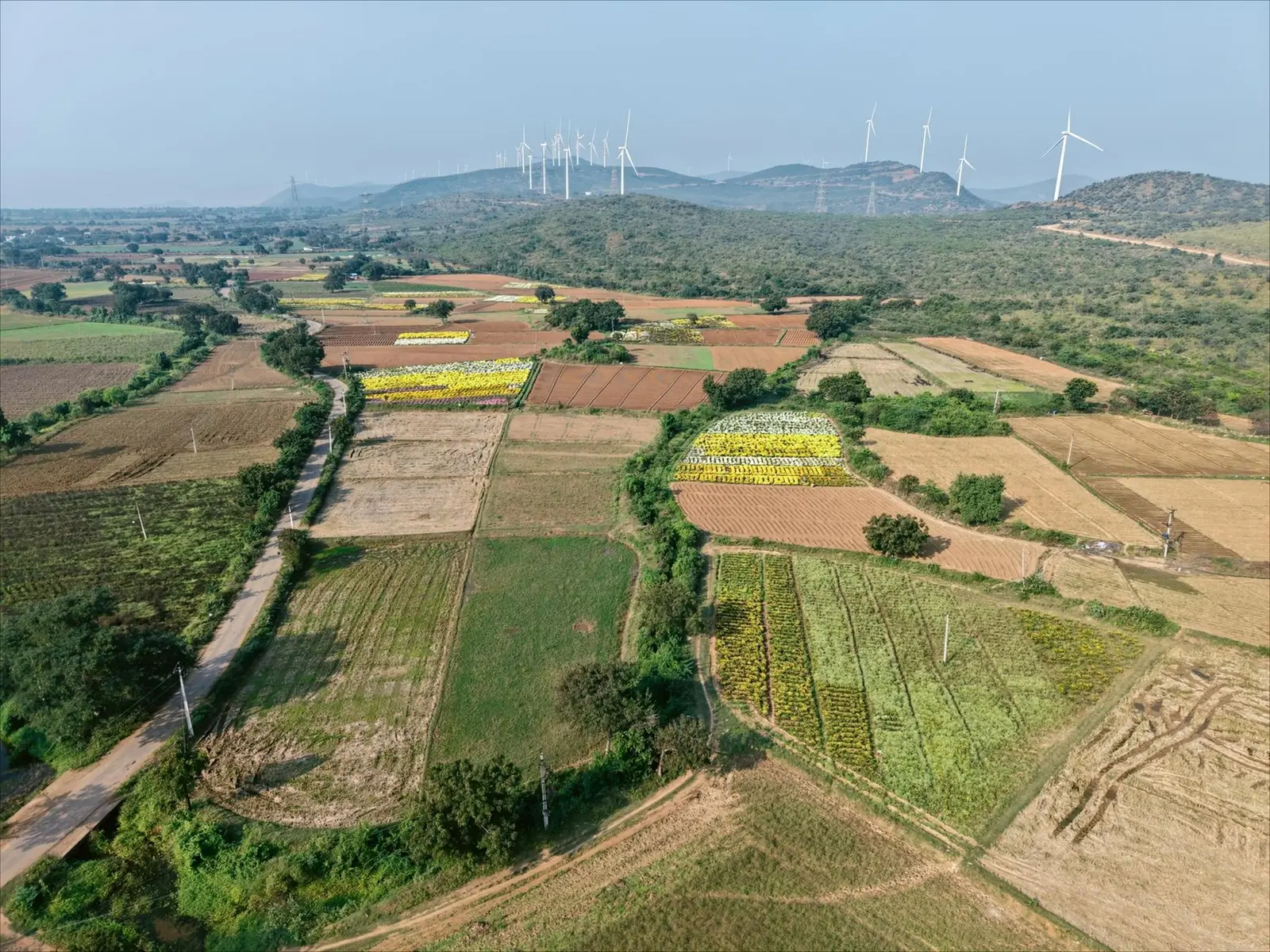
| Current approved footprint | 6,056 acres (~2,451 ha), Raigad district |
|---|---|
| Original DMIC-era proposal | 25,000 hectares notified, later scaled to 6,460 hectares (12,140 ha notified) in Phase I |
| Villages originally notified | 78 villages across Mangaon, Roha and Tala talukas |
| Villages affected per 2022 EIA | 15 villages; 4,500 trees to be felled |
| Acquisition model | Consent-based, under the Maharashtra Industrial Development Act; compulsory acquisition used only in disputed cases |
| 2013 compensation offer | SDO authorised up to ₹50,000/acre; district guardian minister proposed ₹10 lakh/acre after protests |
| Reported acquisition progress | ~88% of land acquisition completed as of July 2022 (dated figure, no newer % published) |
| Government investment (2024 approval) | ₹5,469 crore for the 6,056-acre smart city node |
| Phase 1 infrastructure EPC contract | ₹1,401.84 crore awarded to Ramky Infrastructure (announced March 2026) |
Acquisition model: consent first, compulsory as fallback
Land for the Dighi project has historically been acquired under the Maharashtra Industrial Development Act rather than the central Land Acquisition Act, with the state agency stating a preference for negotiated deals. The state-run Maharashtra Industrial Development Corporation (MIDC) has clarified that the acquisition was done through consent and not under any pressure. An MIDC official described the process this way: "While determining the compensation, the market value of land is considered. The compensation is determined by the agreement between the state government and PAP. In most of the cases, land is acquired by obtaining consent while compulsory acquisition is a rate phenomenon." The same official said MIDC was acquiring barren and waste lands and lands under perennial irrigation and gaothans were avoided.
Despite this framing, villagers have alleged lack of transparency and clarity during land acquisition. More recently, a local activist told researchers that "The Dighi Port Industrial Area initially wanted to acquire land spread across 78 villages, but after the protests by farmers and villagers, the plans have not been executed. The DPIA is sending individual farmers notices to acquire their land." This suggests the acquisition has continued on a farm-by-farm, notice-driven basis rather than as a single consolidated award.
Compensation rates: old figures, no current published rate
No current, project-specific per-acre or per-hectare compensation table for the 2024-approved Dighi Industrial Smart City has been found in public reporting. The most concrete rate figures on record date to the 2013 protest period, when the Sub Divisional Officer, Mangaon, was appointed as land acquisition authority with powers to fix compensation up to Rs 50,000 per acre according to the notice issued to farmers. Facing opposition, the district's guardian minister, Sunil Tatkare, said he would try to offer Rs 10 lakh per acre — but farmers said they did not want to give up land even at the higher offer.
By 2014, MIDC officials described compensation as being fixed through negotiation rather than a fixed statutory schedule: the market value of land is considered, and compensation is determined by agreement between the state government and the project-affected person (PAP). No updated per-acre or per-hectare rate specific to the current 6,056-acre Dighi IMC footprint has been published as of mid-2026; this page will be updated if such a rate schedule is officially released.
Villages covered, by district and taluka
| District | Talukas | Villages (original notification) | Villages (2022 EIA scope) |
|---|---|---|---|
| Raigad | Mangaon, Roha, Tala | 78 | 15 |
Under the original Delhi-Mumbai Industrial Corridor plan, 12,000 hectares of land across 78 villages were notified for the project by MIDC, and farmers from those 78 villages in Mangaon, Roha and Tala tehsils in Raigad protested the acquisition. A 2013 solidarity statement put a finer point on the numbers involved at that stage: 9,715 families across 69 villages had received notifications for acquisition of a total of 24,207 acres, out of a total of 67,500 acres targeted across all 78 villages in the three talukas.
By the time the project reached the environmental-clearance stage for a reduced 5,024-hectare footprint, the affected area had narrowed considerably: at least 4,500 trees were to be felled and 15 villages were to be affected for the project, as per the EIA report. One named parcel that recurs in MIDC's own land-allotment records is Bhalegaon, which appears alongside Phase I and Phase II land in MIDC's online plot listing for "Dighi Port Industrial Area Phase-I, II and Bhalegaon."
How much land, and how the total has shrunk
The scale of land sought for the Dighi project has changed dramatically over its life. Around 25,000 hectares was originally supposed to be acquired under the Delhi-Mumbai Industrial Corridor; this was reduced to 6,460 hectares. An MIDC official explained the phasing: "Of the proposed acquisition of 25,000 hectare, 12,140 hectare has been notified but in the first phase, 6,460 hectares will be acquired." This reduction followed sustained opposition; as one activist put it, "It is a great achievement that due to the consistent protests by farmers the state government has scaled down Dighi Port industrial area considerably."
By the 2022 environmental-clearance stage, the project footprint was described as spread over 5,024 hectares in Raigad district. The current NICDC-listed node approved by the Union Cabinet in August 2024 is smaller still: Dighi Port Industrial Area (DPIA), located in Raigad District, Maharashtra, spans 6,056 acres (roughly 2,451 hectares). Readers should treat these as different project phases/definitions over time rather than a single consistent figure — the 25,000 ha, 6,460 ha, 5,024 ha and 6,056-acre numbers come from different years and different stages of planning.
Budget and cost figures
Multiple, non-identical cost figures exist depending on scope and date. For the Cabinet-approved 6,056-acre smart city node, government sources put the figure at an investment of ₹5,469 crore for the site. Officials separately said the project is expected to draw private investment on top of this: it is projected to attract ₹38,000 crore in investments and create around 109,185 jobs.
An earlier iteration of the project, assessed for environmental clearance in 2022 on a larger 5,024-hectare footprint, carried a different headline cost: the ₹7,360.46-crore DPIA project was expected to be developed alongside the port expansion as a major node of the proposed Delhi-Mumbai Industrial Corridor. Separately, an investment-facilitation listing recorded a total project cost of USD 925.5 million as of 31 July 2025, while the project remained at DPR/feasibility-study stage. These figures reflect different project definitions, timeframes and possibly different scopes (land, port-linked infrastructure, or full industrial city build-out) rather than one another; none should be read as a single, current, all-in budget.
Disputes and farmer opposition
Farmer resistance has shaped this project more than perhaps any other single factor. In April 2013, farmers and labourers from 69 villages, under the Sarvahara Jan Andolan–Jagatikikaran Virodhi Kruti Samiti, held an indefinite dharna in front of the Sub-Divisional Office at Mangaon, and all village panchayats unanimously resolved not to give up their land for the project. The National Alliance of People's Movements backed the protest, and activist Ulka Mahajan argued that a detailed project report had not been prepared and an environment impact assessment had not been done, asking why the government was in such a hurry.
The sustained protests are credited with the scale-back described above. However, opposition did not fully end acquisition: as noted, it was reported that the DMIC Development Corporation Limited decided to scrap the Dighi Port Industrial Area project at one stage, yet the DPIA has continued sending individual farmers notices to acquire their land according to more recent tracking. Separately, the underlying Dighi Port itself went through insolvency — Adani Ports and Special Economic Zone Limited completed the acquisition of the bankrupt Dighi Port Limited on 15 February 2021, for ₹705 crore — which reset commercial expectations for port-linked industrial land even as the separate industrial-area land dispute continued in parallel.
Current stage (as of mid-2026)
As of the 2024 Cabinet approval, government officials indicated that groundwork was already advanced: NICDC's CEO & MD said a lot of time had already been saved in terms of master planning, obtaining environmental clearance from MoEF&CC, and land acquisition, which would reduce the turnaround time for industries once infrastructure is ready. The most specific acquisition-progress figure found in reporting is older: about 88 per cent of the land acquisition had been completed as of July [2022], tied to the pre-2024, 5,024-hectare version of the project. No more recent official percentage has been published for the current 6,056-acre footprint.
On the ground, execution has moved to the infrastructure-building stage for at least part of the site. Ramky Infrastructure Limited has entered into an agreement with Maharashtra Industrial Township Limited (MITL) for EPC-based infrastructure works within Dighi Port Industrial Area (DPIA) Phase 1 under the Delhi Mumbai Industrial Corridor, announced in March 2026. The total contract value is Rs 1,401.84 crore, inclusive of GST and O&M revenues, with the project to be completed within 930 days from the appointed date and a four-year O&M period thereafter. MITL is a special purpose vehicle formed with equity participation from the Government of India and the Maharashtra State Government, tasked with developing Parcel B of the Dighi Port Industrial Area in Raigad District. This indicates that land for at least Phase 1/Parcel B is considered acquisition-ready, even though a comprehensive, up-to-date public acquisition-completion percentage for the whole 6,056-acre node is not currently available.
Development phases
Frequently asked questions
Is land for Dighi Industrial Smart City acquired through consent or forced acquisition?
MIDC has stated that acquisition is primarily consent-based under the Maharashtra Industrial Development Act, with compensation set by agreement based on market value between the state and the affected landowner (PAP). Compulsory acquisition has been used where consent could not be reached, and villagers have alleged a lack of transparency in the process.
What compensation rate are farmers being offered?
No current, project-specific per-acre rate for the 2024-approved node has been published. The last concrete figures on record are from 2013, when the acquisition authority could set rates up to ₹50,000 per acre, and the district's guardian minister offered to push this to ₹10 lakh per acre amid farmer protests.
Which villages and districts are affected?
All the reported land lies in Raigad district, across Mangaon, Roha and Tala talukas. The original DMIC-era notification covered 78 villages; the 2022 environmental-clearance report for a smaller footprint listed 15 affected villages, including land parcels such as Bhalegaon.
How much land is being acquired in total?
This has changed repeatedly: an original DMIC target of 25,000 hectares was cut to a 6,460-hectare Phase I; the project was later assessed for clearance on 5,024 hectares; the Cabinet-approved industrial smart city node stands at 6,056 acres (about 2,451 hectares).
Has there been farmer opposition to the project?
Yes. Farmers across dozens of villages held sustained protests, including an indefinite dharna in Mangaon starting April 2013, backed by groups like the National Alliance of People's Movements and Sarvahara Jan Andolan, which is widely credited with forcing the state to scale back the acquisition area considerably.
What is the current stage of the project?
As of early-to-mid 2026, environmental clearance and master planning are reported complete for the current node, and a ₹1,401.84 crore EPC infrastructure contract for Phase 1/Parcel B has been awarded to Ramky Infrastructure via the Maharashtra Industrial Township Limited SPV. A precise, current land-acquisition completion percentage for the full 6,056-acre site has not been published; the last known figure (~88%) dates to July 2022 for an earlier, larger version of the project.
How much is the government spending on this project?
The 2024 Cabinet approval attached a government investment figure of ₹5,469 crore to the 6,056-acre node, separate from the ₹38,000 crore in private industrial investment officials expect it to attract. Earlier project iterations carried different cost figures (e.g., ₹7,360.46 crore for a larger 2022-era footprint), reflecting different scopes and dates rather than one consistent budget.
Sources
- Secretary DPIIT undertakes site visit of proposed Dighi Port Industrial Area in Maharashtra
- Dighi Industrial Smart City to shoot Maharashtra towards $1 trillion economy
- Dighi Smart City Boosts Maharashtra's $1 Trillion Vision - SSMB
- Maharashtra govt scales down land acquisition for Dighi port project - Business Standard
- Farmers from 78 villages in Maharashtra's Raigad oppose Dighi port project - Land Conflict Watch
- Maharashtra – Statements against forced land acquisition in Raigad district: NAPM, Jagatikikaran Vriodhi Kruti Samiti - Sanhati
- Environment Ministry greenlights Dighi Port Industrial Area - Construction World
- Dighi Port - Wikipedia
- Dighi Port Ind Area Maharashtra - NICDC
- Development of Dighi Port Industrial Area, Raigarh, Maharashtra - India Investment Grid
- MIDC - Online Land Allotment System
- Ramky Infrastructure wins Rs 1,401.84 crore contract for Dighi Port Industrial Area project - Construction Times