Decision Record
APCRDA Act 2014: Land Pooling Scheme Notified for Amaravati Capital City
In late 2014, the Andhra Pradesh government enacted the APCRDA Act and brought it into force, creating a statutory authority empowered to assemble land for a new capital city through a voluntary Land Pooling Scheme rather than compulsory acquisition.
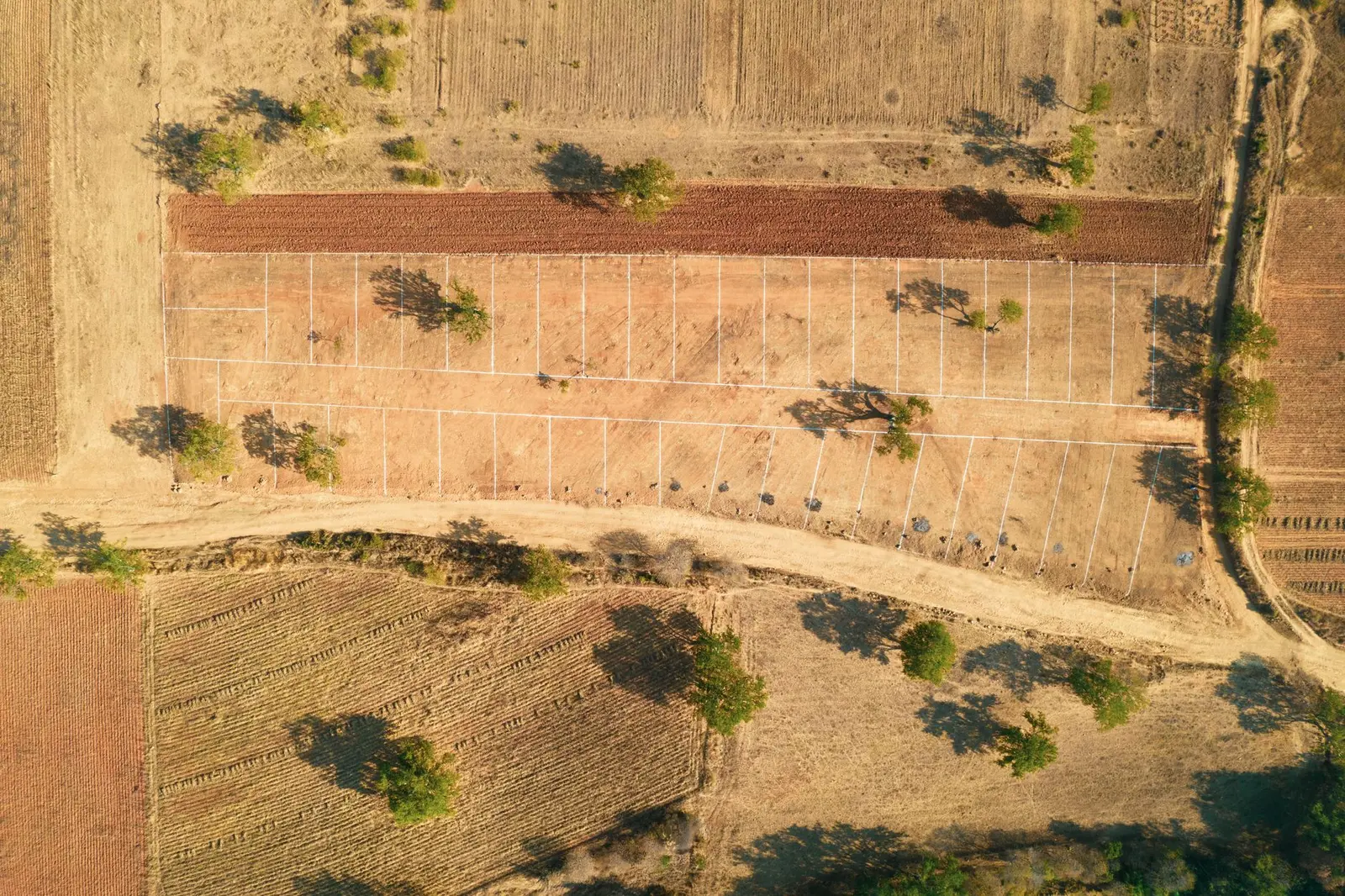
| Governing law | Andhra Pradesh Capital Region Development Authority Act, 2014 (Act No. 11 of 2014) |
|---|---|
| Act brought into force | 30 December 2014, via Extraordinary AP Gazette notification |
| Capital Region area notified (G.O.Ms.No.253) | About 7,068 sq km |
| Capital city footprint | 217.23 sq km across 25 villages in Thullur, Mangalagiri and Tadepalli mandals |
| Land targeted for pooling | About 53,748 acres from 27 villages |
| Land actually pooled | About 33,733 acres (commonly cited as "over 33,000 acres") |
| LPS Rules notified | AP Capital City Land Pooling Scheme (Formulation and Implementation) Rules, 2015 — gazetted 1 January 2015 |
| Authority status (as of July 2026) | Dissolved 2020, restored 2021; Phase-II pooling rules issued 2025 |
What was decided
Chief Minister N. Chandrababu Naidu's administration implemented the Andhra Pradesh Capital Region Development Authority (APCRDA) Act in 2014, which facilitated the creation of a land bank for the new capital, and the Act allowed for voluntary land pooling, enabling landowners to surrender their land in exchange for developed plots and financial compensation. This followed the 2014 bifurcation of the state, after which the residual state had no capital city, with Hyderabad serving as the state's temporary capital despite being located in the new state of Telangana.
The legislation is formally the Andhra Pradesh Capital Region Development Authority Act, 2014, registered as Act No. 11 of 2014, which declared the capital area and created the authority as a statutory body to coordinate integrated development following the state's bifurcation from Telangana.
Which body decided, and when
The Act itself was passed by the state legislature in September 2014, with one account noting that on September 9, 2014, the Andhra Pradesh Legislative Assembly unanimously passed the enabling legislation. It was then operationalised by the state government's Municipal Administration & Urban Development (MA&UD) Department. Official orders record that the Andhra Pradesh Capital Region Development Authority Act, 2014 has come into force with effect from 30 December 2014 by virtue of notification published in the Extra-ordinary issue Andhra Pradesh Gazette, dated 30.12.2014.
On the same date, under a companion order, the Governor of Andhra Pradesh exercised power under the Act to declare the geographic extent of the Capital Region. The order states that the Government, in exercise of the powers under sub-section 1 of Section 3 of the Andhra Pradesh Capital Region Development Authority Act, 2014, hereby notify the areas covering broadly an area of about 7,068 sq km as the Andhra Pradesh Capital Region meant for development under the Act. This was G.O.Ms.No. 253, MA&UD Department, dated 30.12.2014, read together with G.O.Ms.No. 252 of the same date. Follow-on rules — the Andhra Pradesh Capital City Land Pooling Scheme (Formulation and Implementation) Rules, 2015 — were gazetted shortly after, on the Extra-ordinary issue of the Andhra Pradesh Gazette dated 01-01-2015, giving the pooling mechanism its procedural detail (declarations of intention, consent forms, objection hearings, and Land Pooling Ownership Certificates).
Operative details: area, boundaries and targets
The capital city itself was defined as a much smaller area within the wider Capital Region. The city has an area of 217.23 km2 and is spread across 25 villages in three mandals (Thullur, Mangalagiri and Tadepalli) of Guntur district, and the 25 villages in the Capital City area have about 100,000 population in about 27,000 households. Within this footprint, the seed capital is spread over an area of 16.94 km2.
For land assembly, the government aimed to acquire approximately 53,748 acres of land from 27 villages, and around 33,733 acres were pooled through the Land Pooling Scheme. Internal CRDA progress data from the period put the working target at a similar order of magnitude and recorded that against this target, roughly 33,000 acres of consented and agreed land had been physically taken over, with a Consent Extent of 90% and Agreement Extent of 86% of the notified target.
Boundaries were later widened as the wider Capital Region jurisdiction was expanded beyond the original 7,068 sq km figure; APCRDA's jurisdiction is now described as covering a jurisdictional area of 8,352.69 km2, covering the districts of Guntur, Eluru, NTR, Krishna, Palnadu, and Bapatla.
What landowners received
Rather than paying cash compensation for compulsory acquisition, the government used the pooling mechanism to return developed plots. Farmers of Guntur district gave land to the Government of Andhra Pradesh through the land pooling scheme in return for developed plots and lease/annuity payments for a 10-year period. Reporting on the scheme's terms describes farmers being promised smaller but fully developed plots, typically 800 to 1,200 square yards of residential land and up to 450 square yards of commercial land per acre surrendered, along with annual annuities, pensions, skill training and village-level infrastructure.
Under the accompanying 2015 rules, landowners also received a formal title instrument: landowners receive a Land Pooling Ownership Certificate (LPOC), exempting registration fees, and are provided compensation mechanisms like annuity payments and additional benefits. Progress reporting from the implementation period recorded annuity payment of Rs. 427.96 crores made and 33,394 residential plots, 24,232 commercial plots and 1,388 villas allotted against the pooled land.
Practical effect: what the decision achieved and where it stalled
The immediate effect was to give APCRDA a large, contiguous land bank without protracted land-acquisition litigation, and a Master Plan followed: APCRDA notified the Master Plan for the new Greenfield capital city Amaravati in February 2016. A Singaporean master-developer consortium was also brought in for the core start-up area: the state government originally engaged the Singapore-based Ascendas-Singbridge and Sembcorp Development consortium, with the city's infrastructure to be developed in 7–8 years in phases at an estimated cost of ₹33,000 crore.
Momentum reversed after a change of government. With the change of priorities for the government that came into power in 2019, the Amaravati project has substantially slowed, with no completion deadline in sight. A 2023 CAG audit was sharply critical, finding that land acquired through the Land Pooling Scheme had been lying idle after spending Rs 2,244.94 crore, and that the objective of the LPS had not been met. The institutional structure itself was disrupted: in August 2020 the Andhra Pradesh legislative assembly passed a decentralisation act limiting Amaravati to legislative capital status, and the resulting three-capitals plan led to the dissolution of APCRDA and formation of the Amaravati Metropolitan Region Development Area. Farmers' resistance to this shift was sustained and, at points, fatal: at least 64 farmers lost their lives in the Amaravati movement, many after protesting for days under the sun.
Status as of mid-2026
Following the 2024 change of government, the original decision's intent — Amaravati as sole capital, built on the pooled land bank — has been reaffirmed and pooling activity has resumed. Farmers ended their 4.5-year protest after Naidu took charge as chief minister in June 2024, having protested for 1,631 days seeking development of Amaravati as the state's sole capital.
In 2025 the pooling mechanism itself was extended to a wider metro footprint: in July 2025 the Andhra Pradesh government introduced the Capital Region Land Pooling Scheme Rules, 2025 to expand Amaravati into a mega city by integrating Vijayawada, Guntur, Tadepalli, and Mangalagiri, with landowners allowed to voluntarily surrender land in return for developed plots, annuity payments, and social benefits including a farm loan waiver of up to Rs 1.5 lakh, with safeguards such as Aadhaar-based consent and Land Pooling Ownership Certificates. Separately, CRDA approved land pooling of an additional 20,494 acres from villages in Amaravati and Thullur mandals, with a further phase of roughly 16,000 acres envisaged from around December 2025 according to contemporaneous reporting.
Legally, Amaravati's status as capital was placed beyond doubt in 2026: the Central Government issued a final gazette notification recognising Amaravati as the sole capital of Andhra Pradesh, following passage of the Andhra Pradesh Reorganisation (Amendment) Bill, 2026 by both houses of Parliament and presidential assent, with the amendment defining "Amaravati" as the capital city area notified under the Andhra Pradesh Capital Region Development Authority (CRDA) Act, 2014 — directly tying the 2026 constitutional settlement back to the 2014 Act and its land-pooling notifications. On the ground, however, unresolved grievances from the original 2014–2019 pooling round remain a live administrative issue: a December 2025 review reported more than 33,000 acres of fertile land pooled from nearly 29 villages across Guntur and Krishna districts, and government committees were still working through restoration of ₹5,000 monthly pensions for 4,929 beneficiaries, along with arrears, and finalising village infrastructure works.
Frequently asked questions
What exactly did the APCRDA Act 2014 do?
It created the Andhra Pradesh Capital Region Development Authority as a statutory body and gave it legal power to declare a Capital Region, prepare a master plan, and run a voluntary Land Pooling Scheme in place of standard land acquisition.
When did the Act actually come into force?
The Act (No. 11 of 2014) took effect on 30 December 2014 through an Extraordinary Andhra Pradesh Gazette notification, alongside the government order (G.O.Ms.No.253) declaring the Capital Region boundary of about 7,068 sq km.
How much land was targeted versus actually pooled?
The government targeted about 53,748 acres from 27 villages; roughly 33,733 acres were ultimately pooled — a figure widely rounded in reporting to "over 33,000 acres."
What did farmers get in exchange for their land?
Instead of cash compensation, landowners received developed residential and commercial plots (broadly 800–1,200 sq yards residential and up to 450 sq yards commercial per acre surrendered), plus annuity payments, pensions and other social benefits, formalised through a Land Pooling Ownership Certificate.
Is APCRDA still the operating authority today?
APCRDA was dissolved in 2020 amid the three-capitals plan and later restored in 2021. As of mid-2026 it is functioning again and has issued expanded Capital Region Land Pooling Scheme Rules (2025) covering a wider metro area.
Did the original land pooling promises get fulfilled?
Not fully. A 2023 CAG audit found much of the pooled land lying idle despite heavy spending, and as of late 2025 the government was still working through pending plot allotments, annuity arrears and stopped pensions from the original 2014-era pooling round.
Sources
- Amaravati - Wikipedia
- Andhra Pradesh Capital Region Development Authority - Wikipedia
- APCRDA Villages and Limits Overview (G.O.Ms.No.253, 30.12.2014)
- Land Pooling Scheme (Formulation and Implementation) Rules, 2015 - GO MS.1
- Amaravati Land Pooling Scheme Overview (case study/handbook data)
- Pooling Land for Development in Andhra Pradesh Amaravati | Land Pooling Scheme
- Land pooling, farmer resistance, and the Amravati capital project - Land Conflict Watch
- Amaravati land pooling: Government sets tight timelines - The South First
- After Amaravati debacle, Andhra govt begins land pooling for housing scheme in Vizag - The News Minute
- Amaravati Officially Declared as the Sole and Permanent Capital of Andhra Pradesh
- Andhra Pradesh Capital Region Development Authority - Grokipedia
- APCRDA (Swiss Challenge for SEED Startup area of Amaravati)
- The Andhra Pradesh Capital Region Development Authority Act, 2014 - India Code