Commercial Expansion
Haryana Expands Namo City from 5,000 to 9,000 Acres; Seeks Farmer Consent on Land Acquisition
Chief Minister Nayab Singh Saini announced the idea of Namo City in late June 2026, when he met trade representatives from Delhi and pitched a 5,000-acre commercial township to draw wholesale traders out of the Capital's congested markets. The Haryana Shehri Vikas Pradhikaran (HSVP) has since identified villages across Jhajjar, Sonipat and Rohtak districts for a roughly 9,000-acre project, asking farmers there to give their consent on the e-Bhoomi portal by 31 October.
| Original announcement size | 5,000 acres |
|---|---|
| Expanded project scope | 9,000 acres across Jhajjar, Sonipat and Rohtak districts |
| Trader representatives at June meeting | Nearly 400 trader representatives from Sadar Bazar, Chandni Chowk, Gandhi Nagar, Khari Baoli, Nehru Place, Chawri Bazar, Bhagirath Palace and Azadpur |
| Khari Baoli dry fruit traders plots booked | Around 280 plots |
| Ludhiana traders plots booked | Roughly 180 plots |
| Trade associations engaged | 26 trade associations, including electronics, marble, dry fruits, and iron markets |
| Land acquisition deadline | 31 October 2026 for farmer consent on e-Bhoomi portal |
| Development authority | Haryana Shehri Vikas Pradhikaran (HSVP) |
| Key infrastructure features | Wide roads, modern infrastructure, single-window and time-bound clearances, and incentives linked to investment and employment |
What Happened: The June Announcement
Chief Minister Nayab Singh Saini met representatives of 26 Delhi trade associations at Haryana Bhawan in the capital on Monday, 24 June 2026, and made a direct pitch: shift your business to Haryana, where the state promises wide roads, modern infrastructure and hassle-free approvals.
Sadar Bazar and Chandni Chowk suffer from narrow lanes built for handcarts and cycle-rickshaws that are choked with delivery vans, e-rickshaws and parked vehicles, and for traders dealing in bulky items like iron, marble or electronics, loading and unloading goods can take hours.
The centrepiece of the plan is 'Namo City', a proposed township spread over nearly 5,000 acres that will house both commercial establishments and public facilities.
Who Decided: The CM and HSVP
Industries Minister Rao Narbir Singh, who was also present at the meeting, said Delhi's markets are bursting at the seams and that Haryana is building dedicated industrial clusters to give traders the facilities they need. He cited the state's law and order record, road connectivity, and the fact that 14 of Haryana's districts fall within the NCR region as reasons traders should consider relocating.
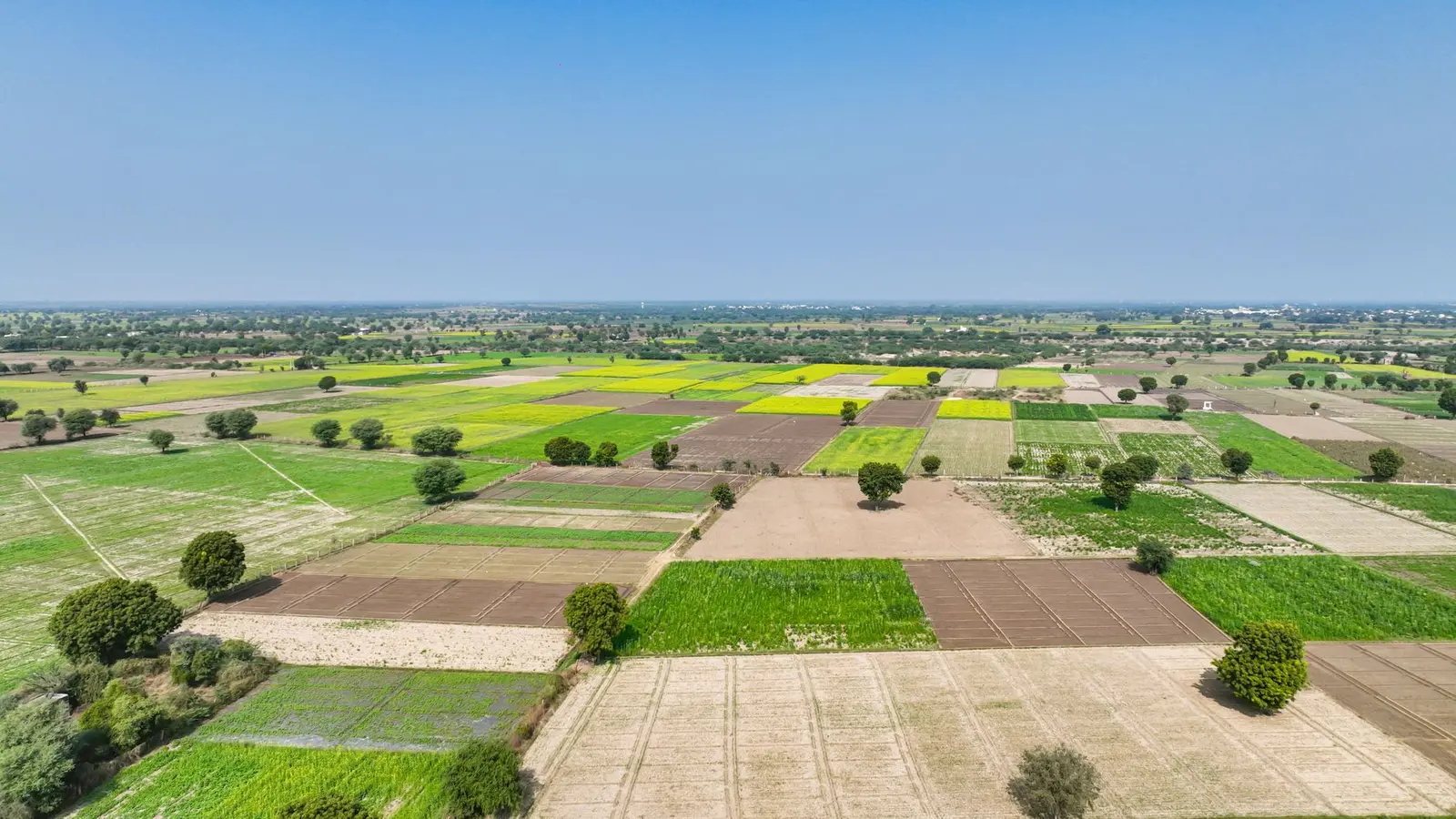
The Haryana Shehri Vikas Pradhikaran (HSVP) has identified villages across Jhajjar, Sonipat and Rohtak districts for the roughly 9,000-acre project, asking farmers there to give their consent on the e-Bhoomi portal by 31 October.
The Numbers: Traders Already Moving
Dry fruit traders from Khari Baoli have already picked up around 280 plots in Haryana, while traders from the Ludhiana dry fruit market have taken roughly 180 plots, signalling that the shift has already begun even before the new township is fully ready.
Monday's meeting was productive, with nearly 400 trader representatives from Sadar Bazar, Chandni Chowk, Gandhi Nagar, Khari Baoli, Nehru Place, Chawri Bazar, Bhagirath Palace and Azadpur showing interest in the proposal. Representatives from 26 trade associations, including electronics, marble, dry fruits, and iron markets, interacted with the Chief Minister and shared their suggestions.
The Infrastructure Promise
Saini said the market will be designed keeping the next 50 years in mind, with wide roads for smooth traffic movement and green spaces, unlike Delhi's cramped wholesale markets. It will be developed with wide roads and modern infrastructure, keeping the next 50 years in mind, ensuring hassle-free movement, and will be a green and pollution-free market where families can also visit and spend time.
As part of the plan, the chief minister said the government is offering customised incentive packages, employment-linked incentives, single-window clearances and time-bound approvals.
What Changes: Scale Expansion and Land Acquisition
The Haryana government has begun the development of Namo City, a greenfield city planned around the Kundli-Manesar-Palwal (KMP) Expressway and the upcoming Delhi-Katra Expressway. The initially announced 5,000-acre commercial township has now been expanded into a broader, 9,000-acre mixed-use urban centre.
The HSVP has identified 10 revenue villages specifically for Namo City: Hasangarh in Rohtak (1,320 acres); Nilothi, Khedi Jasaur, Jasaur Khedi and Loharhedi in Jhajjar (1,731, 2,269, 1,315 and 1,117 acres respectively); and Pai, Barauna, Khurmapur, Rohna and Kidholi in Sonipat (1,040, 174, 440, 516 and 30 acres respectively), adding up to just short of 10,000 acres.
Farmers in these villages have been asked to record their consent on the e-Bhoomi portal by 31 October, after which HSVP says it will proceed to purchase the land as per policy and take up development.
What's Next: Land Acquisition and Development
The HSVP has identified villages across Jhajjar, Sonipat and Rohtak districts for the roughly 9,000-acre project, asking farmers there to give their consent on the e-Bhoomi portal by 31 October. This consent deadline represents the critical next stage before land acquisition can proceed.
The Panchgram Development Bill, cleared by the Haryana Cabinet in 2018, envisioned five new cities over 50,000 hectares that would straddle the KMP Expressway across eight districts: Sonipat, Rohtak, Jhajjar, Gurugram, Rewari, Mewat (Nuh), Faridabad and Palwal. Namo City is positioned as a flagship project within this larger vision.
Traders from the iron market, the marble association and other groups raised their concerns directly with the chief minister, who assured them the government would address their issues and keep his office open for further discussions.
Frequently asked questions
What is Namo City and why was it announced?
Chief Minister Nayab Singh Saini announced the idea of Namo City in late June 2026, when he met trade representatives from Delhi and pitched a 5,000-acre commercial township to draw wholesale traders out of the Capital's congested markets.
What size is Namo City now?
The HSVP has identified villages across Jhajjar, Sonipat and Rohtak districts for a roughly 9,000-acre project. This represents an expansion from the initially announced 5,000 acres.
How many traders have shown interest so far?
Nearly 400 trader representatives from Sadar Bazar, Chandni Chowk, Gandhi Nagar, Khari Baoli, Nehru Place, Chawri Bazar, Bhagirath Palace and Azadpur showed interest in the proposal. Additionally, dry fruit traders from Khari Baoli have already picked up around 280 plots in Haryana, while traders from the Ludhiana dry fruit market have taken roughly 180 plots.
What facilities will Namo City offer?
The market will be designed keeping the next 50 years in mind, with wide roads for smooth traffic movement and green spaces, unlike Delhi's cramped wholesale markets. The government is offering customised incentive packages, employment-linked incentives, single-window clearances and time-bound approvals.
Who is developing Namo City?
The Haryana Shehri Vikas Pradhikaran (HSVP) is overseeing the project.
What is the next step in the project?
HSVP has asked farmers in identified villages to give their consent on the e-Bhoomi portal by 31 October. After this deadline, HSVP says it will proceed to purchase the land as per policy and take up development.