Voluntary Land Procurement
Namo City Land Acquisition: Consent-Based Procurement in Haryana
Namo City is a proposed 9,000-acre greenfield commercial township in Haryana, spanning Jhajjar, Sonipat and Rohtak districts, designed to attract Delhi-based wholesale traders and businesses. The Haryana Shehri Vikas Pradhikaran (HSVP) is acquiring land through a consent-based model on the e-Bhoomi portal, with landowner participation and farmer price proposals replacing traditional government-fixed rates.
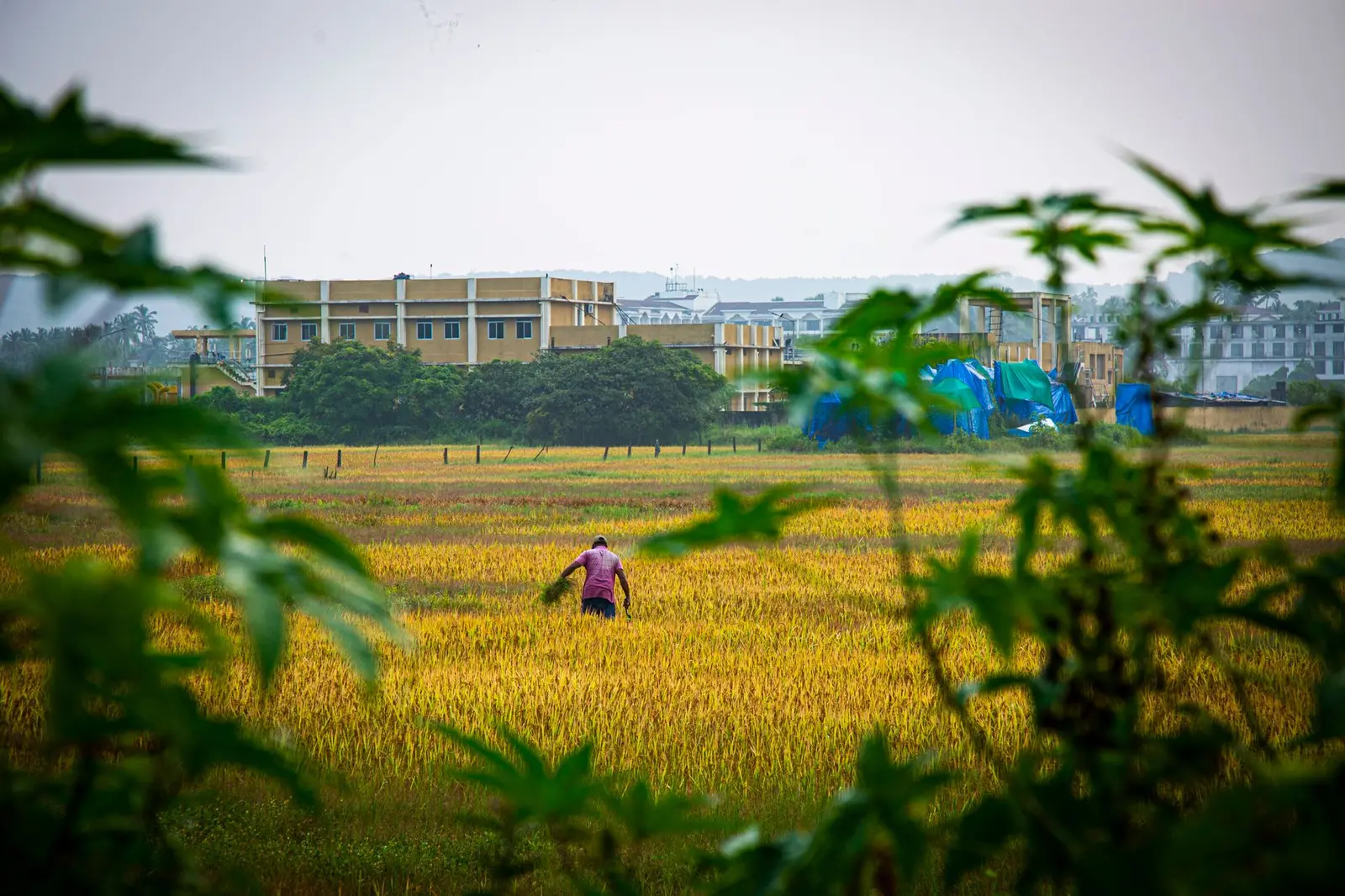
| Total Project Area | <strong>9,000 acres</strong> (expanded from original 5,000-acre announcement in June 2026) |
|---|---|
| Acquisition Model | <strong>Consent-based voluntary procurement</strong>; no forcible acquisition. Landowners voluntarily offer plots via e-Bhoomi portal with self-proposed pricing. |
| Consent Deadline (as of October 2026) | <strong>31 October 2026</strong> for farmers to register land details and expected prices on e-Bhoomi portal |
| Villages Covered | <strong>10 revenue villages identified</strong>; 3 districts (Jhajjar, Sonipat, Rohtak). See villages section for breakdown. |
| Compensation Rates | <strong>Not government-set.</strong> Under consent model, landowners propose their own expected prices; HSVP verifies and negotiates. No fixed per-acre rate published as of October 2026. |
| Incentive Budget | <strong>Rs 5,000 crore</strong> performance-linked incentive (mix of grant, loan, guarantee) approved by NCRPB to catalyse growth; Rs 1,000-crore grant component included. |
| Development Authority | <strong>Haryana Shehri Vikas Pradhikaran (HSVP)</strong> (formerly HUDA) |
| Project Status (as of October 2026) | <strong>Consent collection phase.</strong> Land procurement advertisement published 1 September 2026. Consent registration ongoing; next phase procurement to follow consent deadline. |
| Acquisition Challenges | <strong>Farmer reluctance reported.</strong> In parallel HSVP projects (15 villages including Sankhol, Sarai, Sadpur), most farmers stayed away—unwilling to part with land at government/portal rates as market prices have climbed. |
Acquisition Model & Process
Consent-Based Voluntary Procurement: HSVP is not using traditional forced acquisition; instead, it is a consent-based procurement where landowners can choose to sell their land through transparent negotiations.
HSVP will not forcibly acquire land. Instead, it will purchase land through transparent negotiation or adopt a land pooling mechanism.
e-Bhoomi Portal Process: Farmers in these villages have been asked to record their consent on the e-Bhoomi portal by 31 October, after which HSVP says it will proceed to purchase the land as per policy and take up development. The agency is using the e-Bhoomi portal, an official online platform, to invite landowners to offer plots for development.
Price Determination: Land owners are given the option to register their land details and expected price on the e-Bhoomi portal by 31 October, after which the government will assess and negotiate prices as needed. (Hindi source, translated)
Land Pooling Option: Under Haryana Land Pooling Policy (HLPP), landlords join the scheme voluntarily with at least 70% landowner agreement. Landowners receive INR 50,000 per acre per year until land is developed, and after development, receive 33% of developed residential plots in proportion to contributed land, with 33% sold by HSVP and 33% used for public services.
Villages Covered by District
Total: 10 Revenue Villages Across 3 Districts
Rohtak District
- Hasangarh – 1,320 acres
Sonipat District
- Nilothi
- Khedi Jasaur
- Jasaur Khedi
- Kidholi
Jhajjar District
- 5 villages (names not fully listed in available reporting)
Villages in Sonipat include Nilothi, Khedi Jasaur, Jasaur Khedi, Kidholi (1,040, 174, 440, 516 and 30 acres respectively), adding up to just short of 10,000 acres.
Parallel Consultation Zone: Land was sought across 15 villages, including Sankhol, Sarai and Sadpur, but most farmers stayed away, unwilling to part with land at government rates as market prices have climbed. These broader-zone villages show farmer hesitancy to participate at proposed rates.
Compensation Rates & Payment Terms
No Fixed Government Rate Published: Unlike traditional land acquisitions, Namo City does not use a pre-announced per-acre compensation rate. Landowners themselves are setting their expected price when registering on e-Bhoomi portal, with the government to assess and negotiate as needed.
Voluntary Price Discovery: The e-Bhoomi portal allows farmers to acquire land voluntarily from farmers. The model shifts price negotiation to direct bilateral talks between landowner and HSVP, rather than uniform government-set rates.
Note on Payment Stage: No disbursement figures or payment schedules have been reported as of October 2026, as land procurement is still in the consent-collection phase.
Historical Context—Farmer Compensation Disputes in Haryana: Haryana has faced significant farmer compensation challenges in prior projects. In the Industrial Model Township (IMT) Rozka Meo acquisition (2010), the government initially paid Rs 25 lakh per acre, but after court intervention, farmers obtained Rs 2 crore per acre from Faridabad villages, leading to broader negotiations resulting in Rs 46 lakh per acre for remaining nine villages, though only Rs 21 lakh has been paid with Rs 25 lakh pending despite construction start.
Budget Allocation & Funding
Central Incentive Support: The Board approved a performance-linked incentive of Rs 5,000 crore, structured as a mix of grant, loan and guarantee support, including a Rs 1,000-crore grant component, with NCRPB funding meant to catalyse growth at these nodes.
Land Acquisition Budget (Namo City-Specific): No dedicated land acquisition budget for Namo City alone has been publicly disclosed as of October 2026. The project sits within a larger 64,000-acre procurement drive by HSVP across Haryana.
Broader State Infrastructure Spend: The demand for land will be registered on the e-Bhoomi portal by HSIIDC in the beginning of 2025-26 to develop 10 new Industrial Model Townships (IMTs) on the lines of IMT Kharkhoda. Farmers will be given the option of Land Pooling Policy and Land Partnership Policy. (Haryana Budget 2025-26)
Reported Disputes & Farmer Negotiations
Farmer Reluctance & Price Gap: The Namo City push comes as other HSVP projects barely a few kilometres away remain stuck due to a lackadaisical response from farmers. Land was sought across 15 villages, including Sankhol, Sarai and Sadpur, but most farmers stayed away, unwilling to part with land at government rates as market prices have climbed.
Context from IMT Rozka Meo & Historical Precedent: Farmers from nine villages in the Rozka Meo area have been agitating since February 2024, demanding enhanced compensation for land acquired by the government in 2010 for setting up the Industrial Model Township (IMT) Rozka Meo. The protest, which had been largely peaceful for several months, turned tense in the past two days, with farmers threatening to halt ongoing construction at the IMT site. This reflects broader hesitancy about low initial compensation in Haryana land projects.
No Namo City-Specific Disputes Reported Yet: As of October 2026, no formal dispute resolution or lawyer involvement has been reported for Namo City itself, likely because consent collection is still underway and no acquisition notices have been issued.
Current Stage & Timeline (as of October 2026)
Stage: Consent Collection Phase
- June 2026: Chief Minister Nayab Singh Saini first announced the idea of Namo City in late June this year, when he met trade representatives from Delhi and pitched a 5,000-acre commercial township.
- 1 September 2026: The HSVP's land procurement advertisement, published on 1 September, listed Namo City as a 9,000-acre component within a larger 64,000-acre drive that also covers ordinary [development].
- 31 October 2026: Farmers in these villages have been asked to record their consent on the e-Bhoomi portal by 31 October, after which HSVP says it will proceed to purchase the land as per policy and take up development.
- Post-October 2026: HSVP will transition from consent collection to negotiation, valuation, and purchase completion, followed by infrastructure development.
Expected Timeline to Development: No formal development start date or infrastructure completion target has been announced. The project is expected to unfold over multiple years given its scale and the consent-based model requiring individual landowner-HSVP agreements.
Frequently asked questions
Why is Namo City being acquired through a consent-based model rather than traditional land acquisition?
Officials say this approach is not traditional land acquisition. Instead, it is a consent-based procurement, meaning landowners can choose to sell their land through transparent negotiations. This move marks a shift from years of private-developer-driven growth, as for two decades most new development happened through private builders which pushed land and property prices high. The HSVP plan aims to make quality land available at more stable, government-regulated rates. Additionally, the consent-based procurement model avoids contentious forced acquisitions that plagued earlier government projects, making the process faster and more transparent.
Who is the intended user base for Namo City?
State Chief Minister Nayab Singh Saini held a meeting with representatives of 26 Delhi trade associations at Haryana Bhawan, where he invited them to invest in Haryana, saying the state was creating a large commercial market and industrial ecosystem around Delhi. The planned "Namo City", would be developed over nearly 5,000 acres with commercial establishments and public facilities. Traders had already begun acquiring plots in Haryana, citing around 280 plots taken by traders from the Amritsar dry fruit market and another 180 by traders from Ludhiana.
What is holding back farmer participation in Namo City land procurement?
Most farmers stayed away, unwilling to part with land at government rates as market prices have climbed. This reflects a broader gap between government valuations and market expectations, compounded by farmer experience with prior low-compensation acquisitions in Haryana industrial projects. Farmers appear to be adopting a wait-and-see approach or holding out for higher prices than initial offers.
What happens if farmers don't meet the 31 October 2026 consent deadline?
No explicit statement has been made about consequences of non-compliance with the portal registration deadline. After 31 October, HSVP says it will proceed to purchase the land as per policy and take up development. However, the project's success depends on landowner participation; HSVP is not exercising compulsory acquisition powers. Farmers who do not register by the deadline may lose the opportunity to negotiate directly and could face HSVP pursuit through standard negotiation or alternate procurement channels.
How much will individual farmers receive as compensation?
Compensation is not pre-determined. Landowners themselves are setting their expected price when registering on e-Bhoomi portal, with the government to assess and negotiate as needed. Each deal is a bilateral negotiation between HSVP and the individual landowner. The final amount will depend on land classification (agricultural or non-agricultural), location within the project zone, market rates, and HSVP's valuation and willingness to pay.
Is Namo City in Jhajjar, Sonipat, or Rohtak?
The HSVP has identified villages across Jhajjar, Sonipat and Rohtak districts for the roughly 9,000-acre project. The project spans all three districts. Hasangarh (1,320 acres) is in Rohtak, villages in Sonipat include Nilothi, Khedi Jasaur, Jasaur Khedi, and Kidholi, while five additional villages are in Jhajjar district.
Sources
- Haryana begins process to develop Namo City, a 9,000-acre greenfield urban centre along KMP corridor
- Haryana bets on Delhi's Sadar Bazar traders with 5,000-acre 'Namo City' — The Tribune
- Haryana Begins Major Urban Expansion With New Land Procurement Plan — The Realty Today
- Gurugram's Biggest Land Deal Ever? HSVP Targets 17,000 Acres — SKJ Landbase
- HSVP 276-Acre Land Acquisition Sets the Stage for Gurugram's Next Connectivity Revolution — SKJ Landbase
- Haryana Shahari Vikas Pradhikaran (HSVP) — Wikipedia
- Farmers suspend protest after assurances from Rozka Meo administration — Tribune India
- Haryana Budget 2025-26 — Government of Haryana