Connectivity & Transport
New Noida (DNGIR): Connectivity — Airports, Expressways, Rail & Metro/RRTS Status
New Noida (DNGIR) is a greenfield investment region straddling Gautam Buddh Nagar and Bulandshahr districts, and its future depends heavily on transport links that are mostly still under construction or on paper. This page separates what is actually operating today from what is planned, with dates.
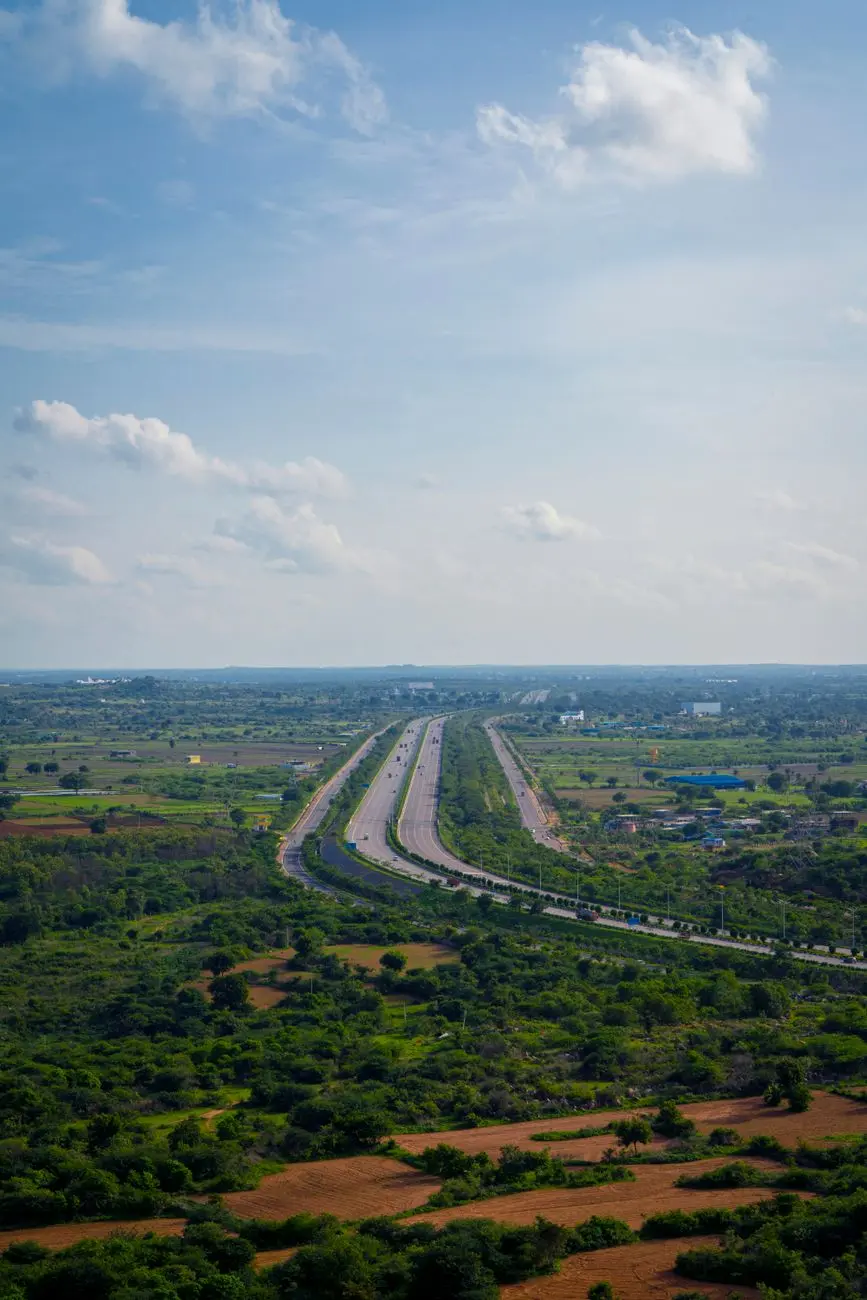
| Notified region size | 209.11 sq km across roughly 80–85 villages (Gautam Budh Nagar & Bulandshahr) |
|---|---|
| Nearest airport | Noida International Airport, Jewar (DXN) — commercial ops began 15 June 2026 |
| Distance to Jewar Airport | About 32 km from the DNGIR site |
| Freight corridors | Western DFC (terminus at Dadri) and Eastern DFC (via Khurja) both run through/near the region |
| Proposed link expressway | 72–74 km Syana–Sector 21 (Film City) road; ~25 km passes through New Noida — planning/approval stage, 2026 |
| Key logistics hub | 825-acre Multi-Modal Logistics Hub (dry port) at Dadri, near the DFC junction — nearing completion |
| RRTS to the area | Ghaziabad–Jewar RRTS proposed, revised to start from Sarai Kale Khan; target 2030–31 |
| Metro to Jewar Airport | Noida Aqua Line extension — DPR finalised, construction not started as of mid-2026; earliest completion 2028 |
Airports
The region's nearest air link is Noida International Airport (Jewar, IATA: DXN), located roughly 32 km from the DNGIR site. The first phase was inaugurated on 28 March 2026, following the grant of an aerodrome licence by the DGCA on 6 March 2026, and commercial operations began on 15 June 2026. Phase 1 capacity is 12 MPPA, scaling to 70 MPPA by 2040.
International services are not yet running. September 2026 is the target for the first international flight, with a full winter international schedule planned from 25 October 2026. Importantly for DNGIR residents and investors, as of the June 2026 launch there was no metro, RRTS or rail link of any kind reaching the airport directly.
Expressways & Highways
DNGIR sits within reach of several existing expressways rather than being built around a single dedicated one. Key connectivity routes cited for the New Noida region include the Eastern Peripheral Expressway, NH-91 (GT Road), and the Ghaziabad-Kanpur Expressway. The area is also positioned near the Noida-Greater Noida Expressway, the Yamuna Expressway and the Delhi-Mumbai Expressway corridor.
Proposed New Noida–Ganga Expressway link (planning stage, 2026)
A new 72-km expressway is being planned to connect New Noida directly with the Ganga Expressway and Noida International Airport in Jewar, running from Syana in Bulandshahr to the Yamuna Expressway near Sector 21 Film City. Nearly 25 km of the road will pass through New Noida itself, and once complete it would give direct access to the Ganga Expressway, Yamuna Expressway, Agra-Lucknow Expressway, Noida-Greater Noida Expressway and Jewar Airport.
A related but distinct scheme — the Ganga Expressway–Jewar link road — has moved further along. Uttar Pradesh has approved construction of a 74.3-km link road connecting the Ganga Expressway and Yamuna Expressway to Noida International Airport at Jewar. The approved land budget is Rs 12.04 billion and the estimated total cost is around Rs 40 billion, with land sanction granted in February 2026. The corridor will traverse 56 villages and includes a nine-kilometre elevated section over densely populated areas.
Within New Noida itself, road plans remain at proposal stage. Authorities are also planning a rotary road system that will connect the expressway to roads inside New Noida, making it easier for residents to travel between villages, sectors and nearby areas. The proposal is expected to be discussed by the New Noida board before construction begins. Several existing roads in the area are expected to be widened from 18 metres to 24 metres to handle future traffic.
Separately, the Jewar–Faridabad Expressway is under construction to give the airport a direct link toward South Delhi/Haryana. In March 2026 the Cabinet Committee on Economic Affairs approved a revised cost estimate for this 31.42 km corridor, of which about 11 km is to be elevated, intersecting the Eastern Peripheral Expressway, the Yamuna Expressway and the Dedicated Freight Corridor.
Rail, Dedicated Freight Corridors & Logistics Hubs
DNGIR's strategic value on paper comes largely from freight rail, not passenger rail. It is one of the key nodes of the DMIC project due to its location at the termination of the Western Dedicated Freight Corridor and its linkages with the Eastern DFC. A dedicated Special Investment Zone spanning approximately 210 sq km is planned to be interconnected through the Western Dedicated Freight Corridor (Dadri to Mumbai) and the Eastern Dedicated Freight Corridor (Ludhiana to Kolkata via Khurja).
The most advanced piece of freight infrastructure nearby is a dry port. Spread across 825 acres, the Multi Modal Logistics Hub at Dadri is positioned near the intersection of the Eastern and Western Dedicated Freight Corridors, and is designed as a dry port offering warehousing, customs clearance, value-added services and freight handling. It is listed by India's National Industrial Corridor agency among projects nearing completion.
On the passenger side, current rail access is thin. As of now only Dadri Station falls under the districts that cater to some main routes of Northern Railways, and not many trains have a stoppage here. A larger multimodal upgrade is under way nearby at Boraki: the government is planning to revamp the Boraki railway station of Greater Noida and create a multi-modal transport hub comprising the railway station, a metro station and a bus stand. The hub is planned on 478 hectares of land in seven villages around Boraki, and as of the plan's last public update about 80 per cent of the required land had been acquired.
The DNGIR master plan itself envisages further direct rail works: the city's layout reaches up to the Delhi-Howrah railway route with plans for direct railway connectivity, and a 1,500-hectare logistics hub is also planned near Chola station, close to the airport.
Metro & RRTS Proposals
No metro or RRTS line currently runs into the DNGIR notified area. The closest projects are all in planning or early construction, aimed primarily at Jewar Airport and Greater Noida rather than DNGIR directly.
- Noida Metro Aqua Line extension to Jewar Airport: has a finalised DPR but construction has not started; the earliest realistic completion is 2028.
- Ghaziabad–Jewar RRTS: is being revised to originate from Sarai Kale Khan and targets 2030-31.
- Delhi–Meerut RRTS (Namo Bharat): operational since 22 February 2026, but does not serve DXN/Jewar directly.
- Gurugram–Noida RRTS: a regional corridor whose alignment ends near, but not inside, DNGIR. The alignment continues eastward through Noida and terminates at Surajpur Junction in Greater Noida, which will serve as an interchange point for the proposed Ghaziabad-Jewar RRTS corridor. According to the detailed project report completed in December 2025, the corridor will feature six major stations.
None of these lines currently reach into the DNGIR footprint itself; any future metro/RRTS station serving New Noida sectors would depend on extensions beyond what is presently funded or under construction.
Internal Road Network
The master plan calls for a tiered internal grid rather than a single arterial road. New Noida is planned to feature a three-tier road network integrated through the Dadri-Noida-Ghaziabad Investment Region.
Land acquisition and arterial road-building form the core of the first implementation phase. The project is structured into four phases, with the first phase scheduled to run from 2024 to 2028, focusing on acquiring roughly 1,432.71 hectares of land and developing arterial and sub-arterial roads. Other sources give the first-phase target as 3,165 hectares by 2027 (see Phases below) — the acreage figures vary by report, but the direction is consistent: land assembly and basic road-cutting come first, sector-level roads later.
Locally, existing village roads are earmarked for widening ahead of new sector development: several existing roads in the area are expected to be widened from 18 metres to 24 metres to handle future traffic.
Ports
DNGIR is landlocked and has no seaport. Its closest equivalent is the inland dry port function of the Dadri logistics hub described above, which is designed to move containerised cargo to and from Jawaharlal Nehru Port (JNPT) near Mumbai via the Western DFC rather than handling cargo directly.
Development phases
Land use
Frequently asked questions
Is New Noida (DNGIR) connected by metro or RRTS today?
No. As of mid-2026, no metro or RRTS line reaches the DNGIR area. The nearest planned links — a Noida Metro Aqua Line extension to Jewar Airport and the Ghaziabad–Jewar RRTS — are still in the DPR/construction-not-started stage, with earliest realistic completion around 2028 and 2030-31 respectively.
How far is Jewar (Noida International) Airport from New Noida?
About 32 km. The airport began commercial operations on 15 June 2026, but has no direct rail, metro or RRTS connection yet — access is currently road-only.
Which existing highways serve the DNGIR area?
Reports cite the Eastern Peripheral Expressway, NH-91 (GT Road), the Ghaziabad-Kanpur Expressway, and proximity to the Yamuna Expressway and Noida-Greater Noida Expressway as the main current road links.
What is the status of the proposed New Noida–Ganga Expressway link?
It is still at the planning stage as of mid-2026. A roughly 72-74 km alignment from Syana (Bulandshahr) to Sector 21/Film City on the Yamuna Expressway has been proposed, with about 25 km passing through New Noida, but it needs to be discussed by the New Noida board before construction starts.
Does any dedicated freight corridor pass through DNGIR?
Yes — the region is positioned at the junction of the Western Dedicated Freight Corridor (terminating at Dadri, linking to JNPT/Mumbai) and the Eastern Dedicated Freight Corridor (Ludhiana to Kolkata via Khurja), which is central to its industrial rationale.
Is there a railway station inside New Noida?
Not yet a dedicated one. The area currently relies on Dadri station, which has limited train stoppages. A larger multimodal hub is being built nearby at Boraki (to be renamed Greater Noida Railway Station), combining rail, metro and bus services, but it remains under development.
Is DNGIR near a seaport?
No — it is landlocked. Its logistics role is built around the 825-acre Multi-Modal Logistics Hub (dry port) at Dadri, which connects by rail to seaports like JNPT via the Western DFC.
Sources
- 72-km Expressway To Connect New Noida, Ganga Expressway And Jewar Airport
- New Noida–Ganga Expressway Solve the Connectivity Crisis?
- The Gurugram Noida RRTS Corridor — Everything You Need to Know
- New Noida Master Plan 2041: Insights into the DNGIR Vision
- New Noida Master Plan 2041: Budget, Map, Proposed Development & Latest Updates
- Dadri-Noida-Ghaziabad Investment Region, Uttar Pradesh (Niveshmitra)
- Dadri-Noida-Ghaziabad Investment region to be developed in 4 phases
- Noida Authority initiates land survey for Dadri-Noida-Ghaziabad investment region
- All about the New Noida project and its latest updates
- All about DNGIR, the 'New Noida' city coming up near Delhi
- New Noida Master Plan 2041: Everything You Need To Know
- Greater Noida Railway Station – Location & Latest Updates
- Multi Modal Logistics And Transport Hub Dadri, Greater Noida, UP (NICDC)
- Greater Noida to get Train Connectivity Soon, Government Mulling Expansion of Boraki Railway Station
- Bodaki Will Be Known As Greater Noida Railway Station
- Uttar Pradesh Approves 74.3 km Link Road To Noida Jewar Airport
- Ganga Expressway: Route, map, latest updates, new Noida Airport link
- Jewar Airport – Noida International Airport (DXN) | Complete Guide 2026
- Rs 40,000,000,000 mega project: UP approves 74.3 km link road
- Noida International Airport 2026: Commercial Flight Dates, Routes, and Jewar Updates
- Noida International Airport (DXN, Jewar) 2026 — Opens 15 June, Complete Guide
- Noida International Airport — Wikipedia
- Asia's Largest International Airport Launch in Q1 2026 Delayed Again